Quick answer
Stock photo licences are non-exclusive, so the same photo can be licensed by thousands of designers at the same time. Two books sharing a cover model is legal and common. Before you buy a cover, reverse image search the artwork, ask what stock sits inside it, and check what any exclusivity claim actually retires.
It is one of the stranger moments in self-publishing. You are scrolling a reader group and the woman from your romance cover is staring back at you from a stranger’s thriller. Different title, different author, same face.
Nothing went wrong and nobody stole anything. This guide explains why collisions happen, how to check for them before you pay, and what an exclusivity promise really protects. We sell premade covers for a living, so we will also be straight about what our own sold-once promise does not cover.
The covers shown below are from our live shelves: 1,611 premade designs in stock as of this update, including 279 romance and 245 fantasy covers. Every design sells once, then retires. Designer-Created premades start at $49.99 for the ebook tier; labelled AI-assisted designs start at $24.99.
Why the same face ends up on two different books
Stock agencies sell licences, not photographs. A standard licence is non-exclusive: the photographer keeps the copyright, the agency keeps the file on sale, and other customers can license the same photo. Adobe Stock states this directly: it does not offer exclusive licences. Nothing in a normal stock licence stops the next buyer from downloading the same image.
Collisions are not random, either. Designers searching “woman in red dress, back turned” or “hooded man, foggy street” see the same first page of results you would. The photos that fit a genre best get licensed most, so the strongest genre images end up on the most covers. Romance readers have run whole discussion threads cataloguing one model’s appearances across dozens of books. That is why collisions cluster on the romance and mystery and thriller shelves: the genres that consume photographic covers fastest draw from the smallest pool of perfect-fit images.
Is it plagiarism when two covers share a photo?
No. Plagiarism means copying someone’s work. Here, both designers paid for the same legitimate licence, and neither needed the other’s permission. The copyright sits with the photographer, not with either author, so neither book infringes the other. What would cross a line is copying a finished cover: lifting the composition, the type treatment and the colour grade so the two covers read as one design. That is a dispute between designers, and it is rare next to ordinary photo overlap. We are designers, not lawyers, so treat all of this as working knowledge rather than legal advice.
What your own licence permits you to do with the image on your cover is a separate question with real print-run limits attached. Until our dedicated licensing guide is live, use the premade versus custom guide and read the seller’s current licence before buying.
The 4 checks to run before you buy a cover
- Reverse image search the artwork. Google Lens and TinEye both accept an uploaded image. Search the seller’s preview; if the central photo is heavily used, other covers and listings surface in seconds.
- Ask what stock is inside the composite. A professional seller can tell you which elements are licensed photography and which are original work. Silence is also an answer.
- Ask what happens to the listing after you buy. Retired permanently, or relisted with a new title on it? Get the answer in writing before you pay.
- Find the noun in the exclusivity claim. “Exclusive design”, “exclusive licence” and “exclusive image” are three different promises. The next section covers which noun protects what.
What does “exclusive” actually retire?
An exclusivity claim protects the thing it names, and only that thing.
- A sold-once design promise (ours) retires the finished cover: the composition, the styling, the typography. Nobody can buy that cover after you.
- An exclusive image arrangement takes the photo itself off the market. Major subscription libraries may not offer that option at all; Adobe Stock explicitly says it does not. A true buyout therefore needs a specialist rights-managed source or a direct agreement, and should never be assumed to come with a premade.
- No premade promise controls the model. A working model shoots whole sessions; even a bought-out photo has siblings from the same shoot on the same agency shelf.
So here is the honest version of our own pitch. When a design sells on our shelf, our system retires the listing automatically, the same day; the sold-once mechanism runs in code, not in marketing copy. The finished design is yours alone. But if that design contains licensed photography, the underlying photo stays on the agency shelf, and the same model could appear inside someone else’s composite tomorrow. Any shop that implies a standard licence prevents that is overselling it. If using no stock at all matters to you, specify original illustration in a custom brief and have the designer confirm the approach before work begins.
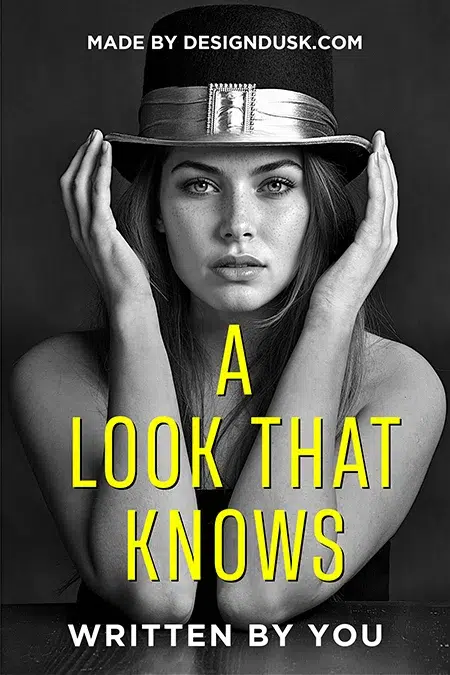
A Look That Knows
A photographic portrait with a direct gaze is exactly where a collision stings most: a face this recognisable cannot hide behind a crop. It is also why this design sells once. The day an author buys it, the listing retires, so the finished cover never appears on a second book. Designer-Created, $49.99 ebook tier.
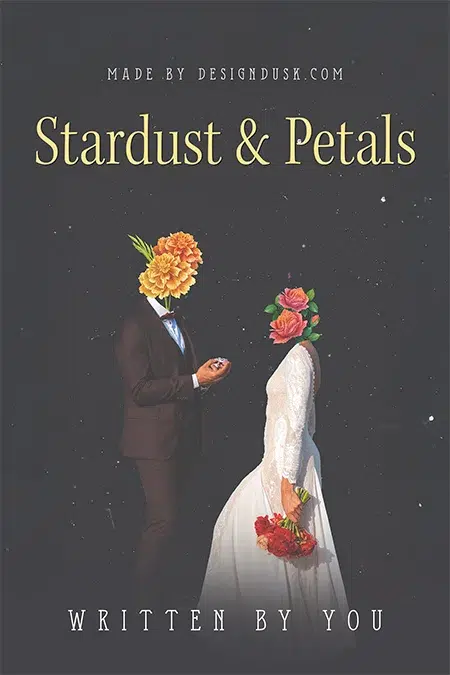
Stardust & Petals
The other route around collisions is transformation. Whatever raw material feeds a composite like this, the finished image exists nowhere else: figures, blooms and star field are combined into something you could never surface with a stock search. The heavier the compositing, the less any shared source matters. Designer-Created, $49.99 ebook tier.
What to do if you find your model on another book
Usually: nothing. Readers almost never notice, and the few who do read it as what it is, a normal part of publishing. Your title, your author name and your typography are what make the cover yours in a reader’s memory.
Act in two cases only. If the other cover copies your whole design rather than sharing a photo, screenshot both with dates and raise it with your designer. If a marketplace raises a rights question, gather the stock receipt, licence and designer invoice before replying; our premade versus custom guide explains what documentation to request before purchase.
If a collision genuinely bothers you before you buy, pick a heavily composited design (like Stardust & Petals above) or go custom. Weigh the extra cost against the real risk with our premade vs custom breakdown.
FAQ
— Browse 279 romance and 245 fantasy covers in stock, each sold once: romance shelf · fantasy shelf. From $24.99.
Yes, legally and commonly. Standard stock licences are non-exclusive, so any number of designers can license the same photograph and build covers on it. Neither author infringes the other, and the photographer keeps the copyright. Only an exclusive licence or a buyout removes an image from circulation, and premade covers almost never include one.
Run the cover through a reverse image search. Google Lens and TinEye both accept uploads and return visually matching pages, including retail listings. Search the full cover, and the base image without text if you have it. Repeat the search occasionally after launch, because new collisions can appear while the photo remains on sale.
No. Both covers rest on valid licences from the rights holder, so neither infringes. Infringement happens when an image is used without a licence or outside its terms, such as past a print-run cap. Copying another cover’s complete design is a different dispute. For anything beyond ordinary overlap, ask an IP lawyer, not a blog.
Most photographic premades are built on licensed stock, including ours; shared source material is part of what keeps premades affordable. The real differences between shops are whether the finished design sells once, whether the shop will tell you what is in the composite, and whether the licence terms are clear before purchase.