
Quick answer
Sold once means the design retires the moment it sells. To verify the claim: look for visibly retired covers in the shop’s catalogue, run a reverse image search, read the licence for exclusive-transfer wording, and ask what happens if a design is double-sold. A shop that cannot show retired covers is asserting, not proving.
The whole point of paying more for an exclusive premade is never seeing your cover on someone else’s book. Shops know this, so “exclusive” and “sold once” appear in plenty of product copy. The claim costs nothing to type and most buyers never test it. We sell on a sold-once model and retire covers in code, so here is what the mechanics look like from the inside, turned into a checklist you can run on any shop before paying. Including ours.
Catalogue status as of this update: 1,611 covers in stock of 1,808 published, with 197 currently marked sold or out of stock in public view. Designer-Created designs start at $49.99; labelled AI-assisted designs start at $24.99. Every available design sells once.
Check 1: pin down what the shop means by exclusive
The word covers at least three different arrangements, and only one of them protects you:
- Sold once: the design sells to one buyer ever and is retired from sale.
- Exclusive licence, shop keeps rights: you get exclusive commercial use, but the design may stay visible or reappear in the shop’s marketing.
- “Unique design”: the artwork was made in-house, which says nothing about how many times it can be sold.
If a product page says exclusive without saying which of these it means, that is your first question to the shop, and you want the answer in writing before payment.
Check 2: look for the graveyard
A shop genuinely running sold-once accumulates public evidence: sold listings that stay published, marked sold, with purchase disabled. That graveyard is the single strongest check on this list, because it cannot be faked cheaply and it grows on its own.
Ours is in plain sight. As of this update, 197 of our 1,808 published covers are marked sold or out of stock. The Eternal Balance, for example, was a fantasy design; it sold, its listing displays SOLD, and it remains visible but unbuyable. Its in-stock neighbours can be bought today, and the moment one sells, its page goes the same way.
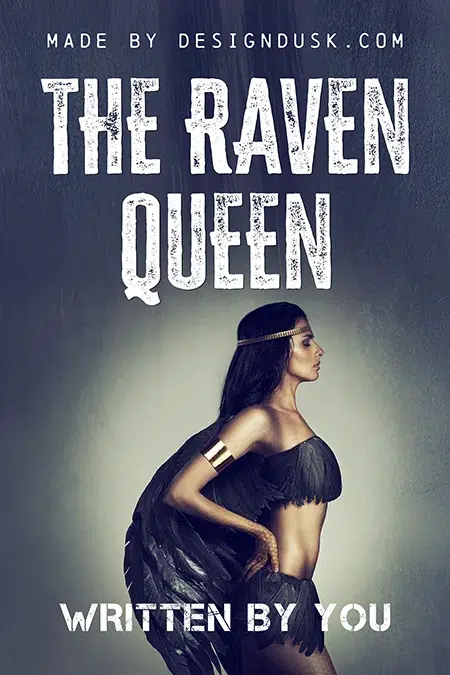
The Raven Queen
The Raven Queen, Designer-Created at $49.99, is in stock on our fantasy shelf as of this update. The profile portrait, black feathered costume and distressed white title create a finished composition that sells once. Whoever buys it retires it; the listing then becomes part of the visible record this check looks for.
If a shop claims sold-once but shows no sold covers anywhere, one of two things is true: they delete sold listings, which makes the claim unverifiable, or nothing has sold. Either way, the strongest form of proof is missing and the other checks have to carry more weight.
Check 3: ask how retirement actually happens
Retirement by memory fails eventually. Someone forgets to unlist a design on a busy week and the shop has honestly sold the same cover twice. So ask the mechanical question: what happens in the minutes after a sale?
On our site the answer is code. Completing an order flips the product to sold automatically; no human is in the loop between the buyer paying and the listing closing. A good answer from any shop names a mechanism like that. A vague answer (“we take it down”) is not disqualifying on its own, but it moves the burden onto the licence and the terms.
Check 4: reverse image search the design
Take the cover image and run it through Google Lens or TinEye. What you want to find: the shop’s own site, and perhaps pins and social posts that point back at it. What you do not want to find: the same finished cover on another storefront, or on a published book.
One honest nuance so you grade results fairly: many premades, including our Designer-Created tier, are built from licensed stock photography. A reverse search may surface the underlying model photo inside other, differently composed covers. That is not a broken promise; exclusivity applies to the finished composition, the crop, the colour work and the typography as one piece. The same finished cover in two places is the red flag.
Check 5: read the licence wording
Exclusivity and usage rights are related but separate promises. The licence should state what you may do with the finished cover, for how long, in which territories and at what print limit. The seller should separately state that the finished design retires after one sale. On our live FAQ, the usage licence is perpetual and worldwide, allows unlimited digital use and covers print runs up to 500,000 copies; an extended licence is available on request.
Wording that deserves a follow-up: the same finished design offered at both exclusive and non-exclusive price points, resale rights left unstated, or no findable licence page at all. Do not confuse a non-exclusive licence for an underlying stock photo with resale of the finished cover; what matters is whether the completed design itself is retired and whether your permitted uses are written clearly.
Check 6: check the terms for the failure case
Even an honest shop can fail once: two carts, one cover, a sync delay. The revealing thing is whether the shop has thought about it. Look in the terms, or ask, what remedy applies after a double-sale: refund, replacement options and which buyer keeps the design. A shop with no answer has not taken its own promise seriously enough to plan for breaking it.
Check 7: ask directly, and grade the reply
Before buying, send the shop these questions:
- What happens to this listing the moment the cover sells?
- Has this design ever been sold, gifted, or used on another author’s book?
- If a double-sale ever happened, what would you do?
A shop that runs sold-once for real answers in specifics, usually quickly, because the answers already exist. Boilerplate or silence tells you what you need to know, and there is plenty of stock elsewhere. To be fair on this point: we are not the only shop with an honest sold-once model, and a few others state it in their product copy. The value of the checklist is that you never have to take anyone’s word for it, including ours.
If the shelf fails the checks
You have two clean exits. Buy from a shop that passes, or step around the question entirely with custom design, which is exclusive by construction: nothing exists before your brief, so there is nothing to resell. Custom runs $120 to $350 here. If you are weighing that trade-off, our premade vs custom guide walks through it, and the fantasy shelf shows what a sold-once catalogue looks like with the retired listings left in view.
FAQ
— Every available DesignDusk cover sells once and retires in public view: 1,611 in stock, with 197 sold or out of stock and visible. Designer-Created from $49.99, labelled AI-assisted designs from $24.99. Browse the fantasy shelf to see the model working.
It means the design is sold to exactly one buyer and then permanently retired from sale, so no other book will ever wear it. It is the strongest form of premade exclusivity. Weaker versions use the same exclusivity language, so confirm the shop retires designs rather than merely licensing them exclusively.
On a genuine sold-once shop, no: the listing closes automatically when the first buyer pays. On shops selling non-exclusive licences, yes, by design, which is how some covers sell very cheaply. Check the licence wording and look for visibly retired covers in the catalogue before you assume you are protected.
Run the cover image through a reverse image search tool such as Google Lens or TinEye. The shop’s own pages are fine; the same finished cover on another storefront or a published book is not. Stock photo elements appearing in other compositions are normal and do not break exclusivity of the finished design.
One that clearly states the duration, territory, digital use, print limit and any need for an extended licence. The sold-once promise should separately confirm that the finished design retires from sale. Stock elements may still carry their own non-exclusive licences, so that phrase alone does not prove the completed cover can be resold.