
Quick answer
A box set cover is really two jobs. For the ebook bundle you build a 3D composite from your existing covers. For print there is no box: print-on-demand makes single volumes, so a print box set is an omnibus with one wrap. Reuse matching covers; commission a fresh key image when they clash.
Authors usually arrive at the box set question with three books published and zero budget for new art. Good news: if your series covers were designed as a family, the box set image is an assembly job, not a design job. This guide covers the ebook composite, the print reality nobody warns you about, and the honest test for whether your existing covers can carry a bundle.
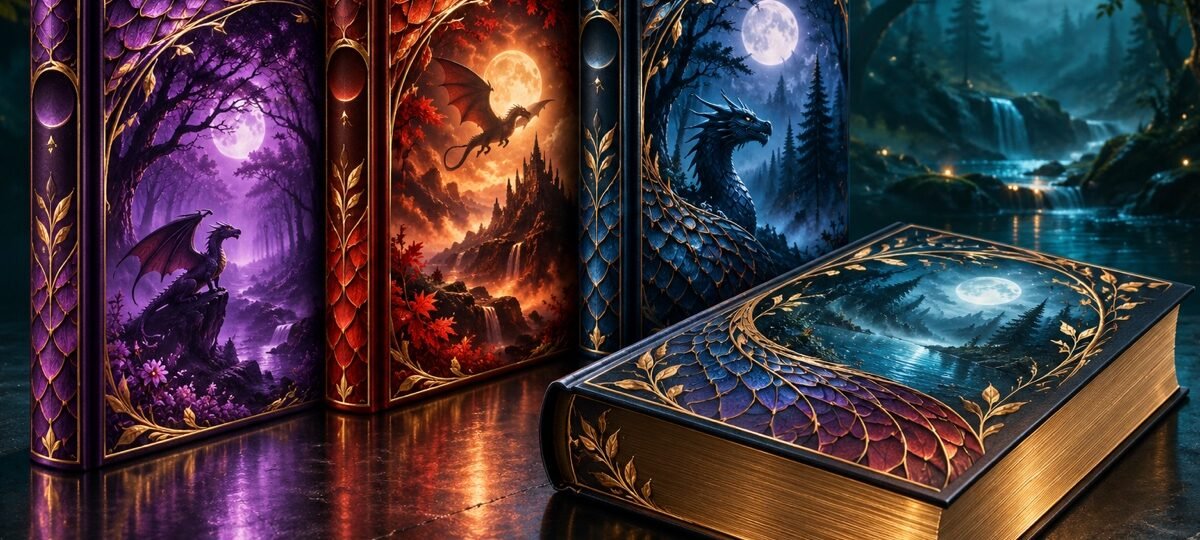
The three covers shown below are live on our fantasy shelf as of this update, each sold exactly once, designer-created at $49.99 ebook / $99.99 with paperback wrap / $149.99 with hardback. Shelf-wide, premades start at $24.99 for the labelled AI-assisted tier.
What a box set cover actually is
An ebook box set is a normal Kindle product. It gets one cover image at the standard cover ratio, uploaded like any other. What makes it a “box set cover” is the artwork: a rendered 3D mockup of your books standing together in a slipcase, spines and front covers angled toward the viewer. The render is marketing theatre. There is no physical box; the file is a flat JPEG like every other ebook cover, built to KDP’s recommended 2,560 x 1,600 pixels .
The composite works because it signals value. Three visible spines say “three full novels” faster than any subtitle. That is the entire trick.
How the 3D composite is built
The workflow we use when a client brings us their series:
- Flatten each cover to its front panel at full resolution. Screenshots of store thumbnails are not usable; you need the delivered files.
- Build a spine for each volume. Ebook-only series often have no spines, so the designer creates them: background colour pulled from each cover, series logotype rotated, volume number.
- Arrange the mockup. The standard read is book one in front, later volumes stepped behind, slight perspective, soft ground shadow.
- Add the set title. “The Complete Trilogy” or “Books 1-3” in the series typeface, large enough to read at thumbnail size.
- Export flat at cover ratio and test at 100 pixels wide. If you cannot count three books at that size, simplify the angle.
Spine anatomy, wrap math and the size numbers behind step 2 live in our book cover size guide.
Print: your box set is really an omnibus
Here is the part the service pages skip. KDP and IngramSpark print single volumes; neither manufactures a slipcase or shrink-wraps three paperbacks together in standard print-on-demand . A “print box set” is an omnibus edition: all three books in one thick paperback or hardback with one wrap and one very wide spine.
Two consequences follow. First, page count: KDP paperbacks cap out up to 830 pages for some paperback configurations, so three long novels may not fit one spine and IngramSpark’s limits differ by trim and paper. Second, the omnibus is a new edition, which means its own ISBN and its own wrap built from your final page count; our ISBN guide covers which numbers you need. Physical slipcases exist, but they come from offset or short-run specialty printers at hundreds of units minimum, which is a different budget conversation.
Making covers you already own read as one set
A composite only works if the three covers read as siblings. The test is typography first, image second. Here is a family from our own shelf that passes before a single mockup is built:
Charming Drake
Charming Drake, purple colourway: an illustrated baby dragon centred in a night forest, title in a rounded display face, author line in white capitals at the base. Hold the layout in mind and compare it with the next two. $49.99 ebook.

Charming Drake
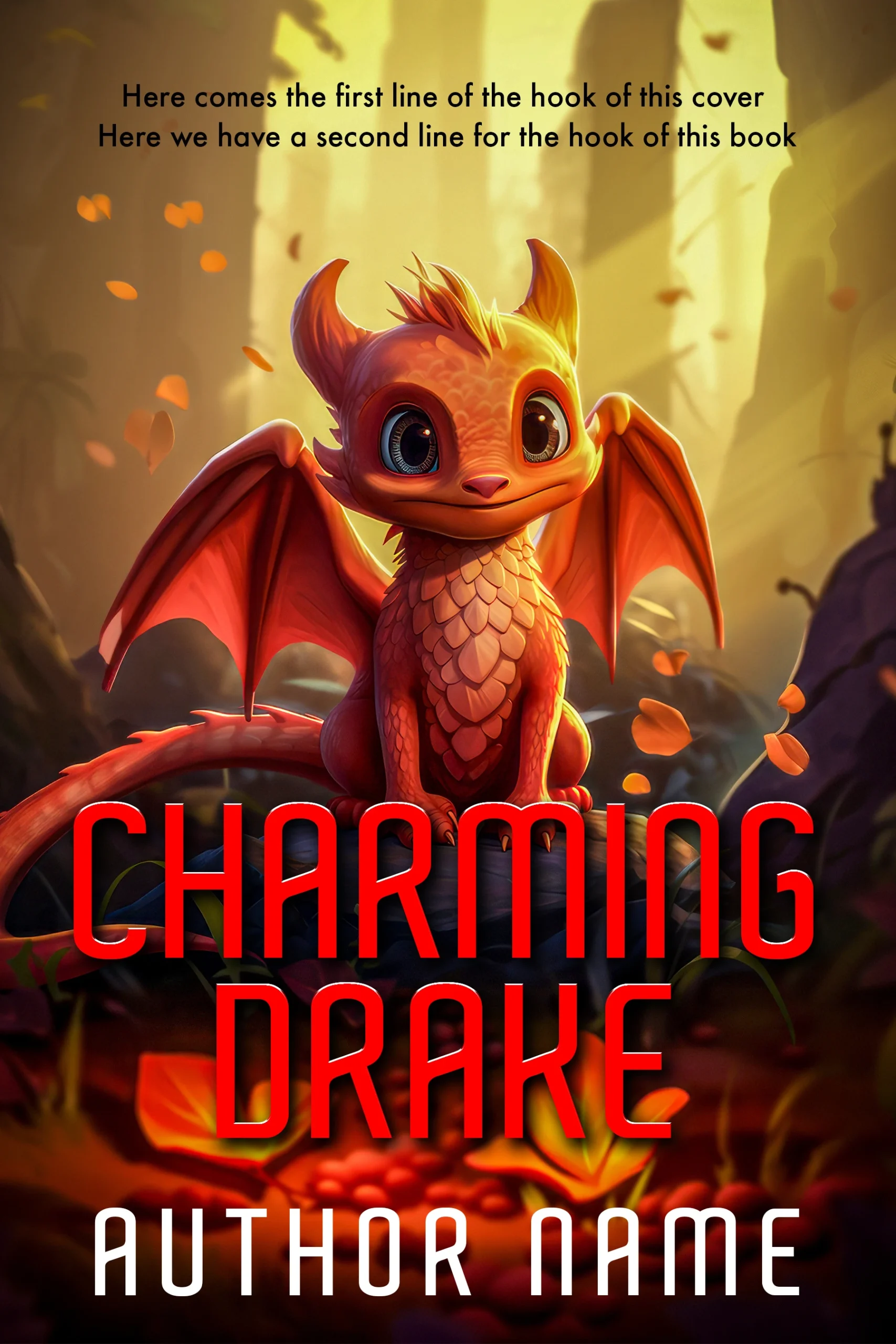
The red colourway keeps every structural decision: same centred creature, same title face and placement, same author treatment. Only palette and pose change. Spines built from these three would already look like a set. $49.99 ebook.
Charming Drake
The blue colourway completes the family. Colour is doing the volume-numbering work here: readers learn “purple is book one, red is book two” faster than they read numerals. A composite of these three needs no rescue work at all. $49.99 ebook.
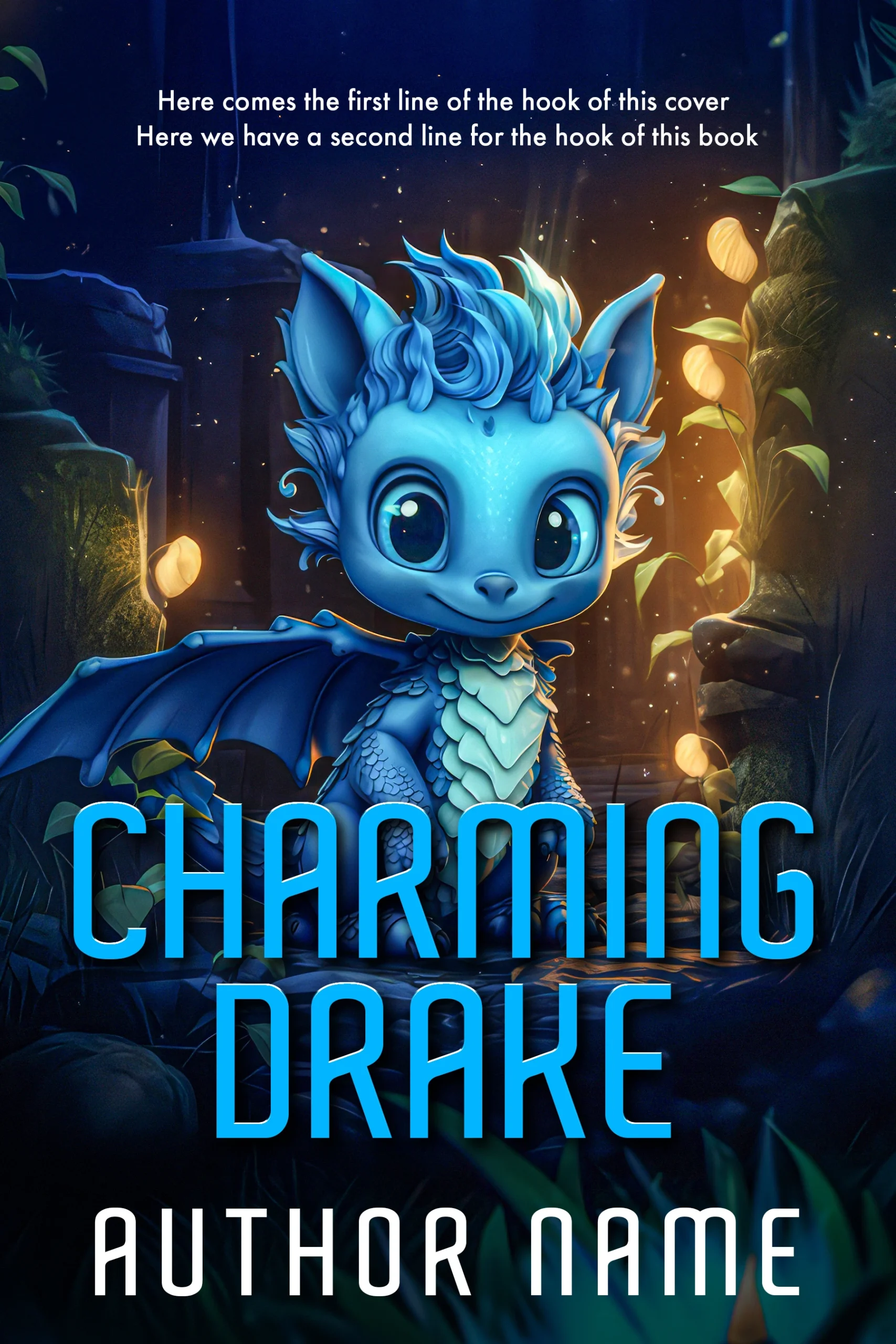
That is the standard to aim for: one title face, one layout grid, one illustration style, with colour as the only variable. When a series is bought as premades one at a time, buy the siblings in the same sitting. Sold-once shops cannot reprint a family later; on our own young adult shelf, the Wheatland Reverie trilogy is down to two in-stock volumes because the third already sold.
When the styles clash: three rescue moves
That same Wheatland family shows the harder case. Book one is a soft watercolour of a woman in a rose dress in a pale wheat field, title set at the top in a magenta-to-purple serif. Book two moves to a moodier photographic style, grey sky over golden wheat, and the title drops to the bottom two-thirds in teal. Same serif lettering style, same wheat-field world, but different title positions and different title colours. Side by side in a box render, that drift shows.
The rescue moves, in order of cost:
| Move | What it fixes | Typical cost |
|---|---|---|
| Re-set the series typography: one title face, one position, applied to all fronts | Title drift, the most visible clash | Small; type-only edits |
| Unify with a wash: shared colour grade or overlay across all three panels | Palette drift between photo and illustration styles | Moderate |
| Hide the fronts: spine-led mockup plus one new key image | Styles too far apart to sit together | The price of one new cover |
Move one solves most real cases. If you are reaching for move three, read the next section.
When the box set needs a fresh key image
Commission new art for the bundle when any of these is true: the covers span styles that no grade can reconcile (photographic book one, illustrated book three), the series brand has outgrown the original covers, or the box set is your flagship product for an ad campaign and deserves its own hero image. In that case the box set cover becomes a fourth design: one strong image plus the series logotype, with the individual books relegated to small spines or dropped entirely.
That is a custom job: $120 for an ebook-only bundle image, $250 with a print omnibus wrap, $350 with hardback. Bring your existing covers and your final page counts to the brief; the wrap cannot be built without them.
FAQ
— Building a set from scratch instead? Series families like the three above appear across 1,700+ in-stock premades, each sold once. Buy the siblings together, from $24.99, or brief a custom bundle cover from $120.
The same as any ebook cover on the store you upload to. For Amazon KDP that means a flat image at a 1.6:1 height-to-width ratio, recommended at 2,560 x 1,600 pixels. The 3D box render sits inside that canvas. There is no special box set format; the composite is just the artwork.
Yes. An ebook box set is published as a normal Kindle title containing all the books, with a bundle cover and its own product page. In print, KDP produces it as one thick omnibus volume rather than a physical boxed set, subject to page-count limits, so very long trilogies sometimes split into two omnibus volumes.
The ebook edition on KDP gets an ASIN and does not require an ISBN. A print omnibus is a distinct edition and needs its own ISBN, separate from the individual books’ numbers. If you bought a block of ISBNs for the series, assign the next free number to the omnibus.
Usually not. If your covers share one title face, one layout and one illustration style, a designer can build the 3D composite directly from the files you already own. New art earns its cost when the covers clash in style, when the series has rebranded, or when the bundle anchors an ad campaign.