
Quick answer
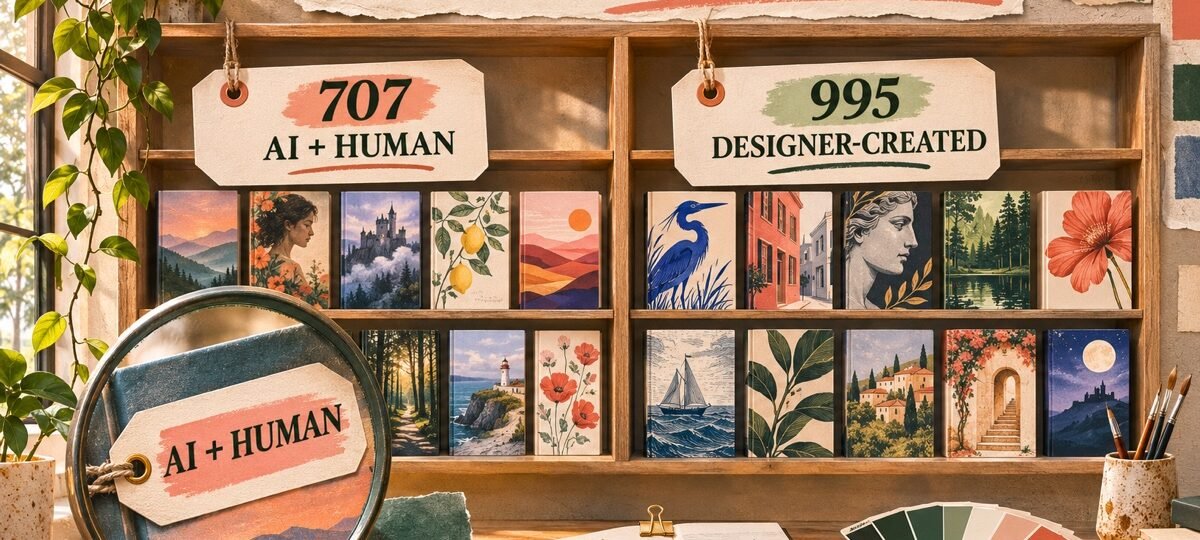
Of 1,702 published DesignDusk covers with a recorded creation-method label, 707 use AI-generated base imagery and carry the AI + Human label. Of those, 579 are currently in stock. The tier starts at $24.99, and the label stays because the workflow and labour are different and buyers deserve to know before paying.
DesignDusk is two brothers. Usama runs the studio from Perth and designs covers; his brother, our lead designer, designs from Lahore. Between us we have put together 1,702 published, method-labelled premade covers, each sold exactly once. This piece is about the 707 covers that carry our AI + Human label: how the tier came to exist, why we chose to mark it, and what transparent pricing changes. Plenty of people write about AI art ethics from the outside. This is what the decision looks like from inside the design chair.
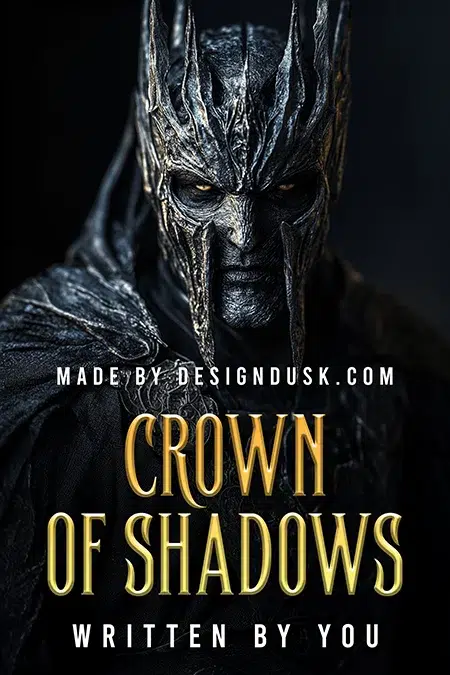
The cover shown below is a live premade from our fantasy shelf, 241 fantasy covers in stock as of this update, each sold once and then retired. Tier prices: AI + Human starts at $24.99 ebook / $59.99 +paperback; Designer-Created starts at $49.99 ebook / $99.99 +paperback.
How AI became one of our cover tiers
At some point the image generators stopped being a novelty and became a tool sitting on the same desk as everything else. We tried them the way we try any tool, on real work, and learned quickly what they are good at and what they are not.
They are good at atmosphere: skies, textures, a single dramatic subject. They are useless at everything that makes an image a book cover. They cannot set type. They cannot hold a margin, build a spine, respect a bleed line, or keep a title readable at thumbnail size. So a workflow settled in for a slice of the catalogue: a generated base image, then human compositing, colour grading, typography and print preparation on top. Real hours, fewer of them.
That workflow became the AI + Human tier. It now accounts for 707 of the 1,702 published products with a recorded creation-method label; 579 are currently in stock. The human-labelled side remains larger at 995 published products, including 917 in stock.
Crown of Shadows
Crown of Shadows, from the AI + Human tier at $24.99. The armoured figure began as AI-generated imagery; the crop, the colour grade, and the gold title-work at the base are human decisions. The product page says all of this, which is the entire point of this article.
Why we put a label on it
Nobody made us. We sell from our own site, no marketplace rule applies to us, and most of our competitors declare nothing. Four things pushed us the other way.
First, the emails. Authors had started asking, in so many words, “is this cover AI?” You can only answer that honestly if the answer is written down somewhere. Dodging it in a sales email felt like the beginning of a much worse conversation later.
Second, what was happening elsewhere. Author communities carry a steady stream of stories about people who paid human rates for design work and later discovered generator output underneath. The anger in those threads lands on the whole premade market, including the honest end of it. We did not want to be findable in that blast radius.
Third, buyers sort on this. Searches like “premade book covers no ai” surface our shelves every week, and a small, steady trickle of buyers clicks through on exactly that phrase. That search only has a good answer on a site where the AI covers are marked, because an unlabelled catalogue can promise nothing.
Fourth, the plain fact that the two products are different amounts of human labour. Selling them at the same price under the same description is not a pricing strategy, it is a margin hiding in ambiguity.
Why the AI tier costs half
A designer-created cover carries hours of artwork before the type goes on. On an AI-assisted cover the base image arrives in minutes, and the human hours go into selection, compositing, grading, typography and print files. Fewer hours, honestly priced: $24.99 against $49.99 for the ebook cover, $59.99 against $99.99 with the paperback wrap, $99.99 against $149.99 with hardback.
What does not change between tiers: the licence, the print wrap options, the human typography and print preparation, and the sold-once rule. When a cover sells, it is retired, whichever tier it came from. The price difference is labour, not rights and not quality control.
What the label cost us
Here is where you expect a conversion graph showing the label paying for itself. We do not have one, and we are not going to invent one. Every cover we sell is sold once, so no design ever runs labelled against unlabelled, and anyone quoting you a precise number for what honesty does to conversion is making it up.
What we can publish is a current inventory snapshot. On 7 November 2026, 128 of 707 published AI + Human products and 78 of 995 human-labelled products were retired or out of stock. That is 18.1% versus 7.8%, but it is not a controlled conversion test: prices, publication dates and genre mix differ. The honest reading is narrower: a clear AI label does not prevent the tier from selling.
What we can tell you is what the decision visibly costs. We set a lower starting price on the AI + Human tier, which is real money surrendered when a comparable human-made cover would carry the higher price. We handed buyers a filter that some use against us: a reader who wants nothing to do with AI can now exclude those covers in one glance, where an unlabelled shop would have kept the sale. And we get lectured from both directions, too much AI for one crowd, too fussy about labels for the other.
What we got back is harder to count and worth more. The 995 human-labelled published covers became believable, because a shop that marks its AI tier when nothing forces it to has receipts for the rest of the catalogue. The awkward emails stopped; the answer to “is this AI?” is now a link. And pieces like this one became possible to write without hypocrisy, which no competitor who hides their methods can do.
Why the label stays
Trust is the only durable advantage a shop our size has. Prices can be matched and styles can be copied, but a public labelling policy only works if you never break it, and that is exactly what makes it hard to copy quietly.
So the label stays. Every product page states its tier, and the shelves let you shop accordingly, from the romance shelf to fantasy and everything between. If you want human-made work, the designer-created tier is marked. If the budget matters more and you are comfortable with a labelled AI base, that tier is marked too, at $24.99. If you want a cover that exists nowhere else in any form, custom design is human-built to your brief from $120. And if you are still weighing routes, premade vs custom walks the whole decision; Australian authors juggling disclosure rules can start with our Australian AI rules guide.
FAQ
707 published covers carry the AI + Human label, including 579 currently in stock. Browse the fantasy and romance shelves, or brief a custom cover from $120.
On our covers it means the base imagery was AI-generated, and a human did everything that turns an image into a cover: selection, compositing, colour grading, typography and print preparation. It sits between fully hand-built artwork and raw generator output, and the label tells you which parts were which.
Fewer human hours. A designer-created cover carries hours of original artwork before typography starts; an AI-assisted cover replaces that artwork stage with a generated base. We price the difference plainly, $24.99 against $49.99 for the ebook tier, rather than charging full human rates for partly generated work.
The reliable way is a shop that tells you: a stated method on the product page, priced accordingly. Failing that, look for artefacts (hands, melted lettering, ornaments merging into hair), run a reverse image search on the artwork, and ask the seller directly. A shop that will not answer the question has answered it.
At our shop, yes. Both tiers carry the same licence, the same paperback and hardback wrap options, and the same sold-once rule; the design is retired when it sells. The price difference between $24.99 and $49.99 reflects labour hours, not a difference in what you are allowed to do with the cover.