

Quick answer
A devotional back cover carries six zones: a scripture pull with its translation credit, a promise paragraph written to the reader, the reading structure (90-day, 52-week), one or two endorsements, a short ministry bio, and the barcode zone. Buyers scan verse first, structure second, author third, so the layout follows that order.
Devotional buyers flip to the back faster than almost any other book buyer, because the back answers the three questions the front cannot: is this my tradition, will it fit my routine, and do I trust the person who wrote it. We design full print wraps for religious titles, and the back layout follows a stable anatomy. Here are the six zones, top to bottom, with the decisions inside each one.
Our religious and spiritual shelf holds 48 in-stock covers as of this update, each sold once and then retired. All 48 are designer-created: $49.99 for the ebook edition, $99.99 with the paperback wrap this article is about.
How a devotional back cover gets read
Watch someone pick up a devotional in a bookshop and the sweep is consistent. The eye lands on the scripture pull, because the verse (and its translation) is the fastest tradition check that exists. Then it drops to the structure line: 90 days, 52 weeks, five minutes a morning. Then it finds the author and asks who they are to write this. The blurb gets read last, if at all. Lay the zones out in that order and the cover cooperates with the buyer instead of fighting the sweep.
Zone 1: The scripture pull
One verse, set larger than the body text, near the top. Choose the verse the book actually lives in rather than the most famous one in the neighbourhood; readers notice when a cover verse is decoration. Two craft rules. First, credit the translation every time (“Isaiah 40:31, NIV”), because for this buyer the translation is doctrinal information. Second, check the permission rules for that translation before the wrap is final: rights vary by translation and territory. Current ESV standard-use terms allow up to 500 verses subject to proportional limits and the required notice. Biblica’s NIV general guidelines also use a 500-verse ceiling, but commercial print distribution may require permission through its publishing partner. Check the current rights page before the wrap is final. The copyright page carries the notice; the back cover carries the reference.
Zone 2: The promise paragraph
The devotional blurb is not a plot summary and it is not the author’s testimony. It is a second-person promise: what forty mornings with this book will do for the reader’s walk. Three or four sentences, 60 to 100 words, and concrete beats lofty. “Each day pairs one psalm with a two-minute reflection and one written prompt” sells more books than a paragraph of abstractions about the journey of faith. Write it to one reader, in their circumstance, and let the structure do the persuading.
Zone 3: The structure line
The single highest-converting line on a devotional back cover states the format plainly: “90 daily readings, each five minutes.” Devotionals are bought as routines, so the buyer needs the shape of the routine before committing. Set this line visually apart, bold or in a small band of its own, rather than burying it inside the blurb. If the interior delivers a consistent daily unit (reading, reflection, prayer, journal space), say so here and make sure the interior actually agrees; our formatting service ($95 to $395) exists partly because reading-plan interiors are fiddly to build well.
Zone 4: Endorsements
One strong endorsement beats three vague ones. For a devotional, strong means a name the target reader’s tradition recognises: their kind of pastor, ministry leader or author, with an affiliation line under the name. A single sentence of praise from the right person carries more trust than a paragraph from a stranger, and it costs less space. No endorsements yet? Leave the zone out. Empty flattery from unnamed “readers” is a negative signal on this shelf, where trust is the entire transaction.
Zone 5: The ministry bio
Two or three sentences: who the author is, where they serve, and one line of warmth. Credential here means ministry standing more than academic letters, although both help. Name the church, ministry or community, because the affiliation quietly answers the tradition question a second time. A photo is optional; devotional buyers care more about the shepherding claim than the face. If the author leads a ministry with an established audience, the bio is also the bridge that audience walks across to find the book.
Zone 6: Barcode and category line
The bottom strip is functional. KDP places its automatic barcode in the lower-right of the back cover; reserve the barcode margin shown on the generated template, so nothing load-bearing can live there; the full zone maths is in our book cover size guide, and how the ISBN behind the barcode works is covered in our ISBN guide. Add a category line in small type, “Devotional / Christian Living”, top-left of the strip: shops and libraries use it, and it is one more quiet signal that the book knows its shelf.
Making the back agree with the front
The back cover extends the front’s palette and mood; it never introduces new ones. Three covers from our shelf show how different fronts set up different backs.
He Carried It All
He Carried It All keeps its whole lower half nearly solid black, and that field wraps naturally around the spine: the back becomes the same deep ground with the scripture pull in the cover’s yellow, white body text below. The wrap feels like one object because the darkness carries all the way around. Designer-created, $49.99.

Path to Calvary
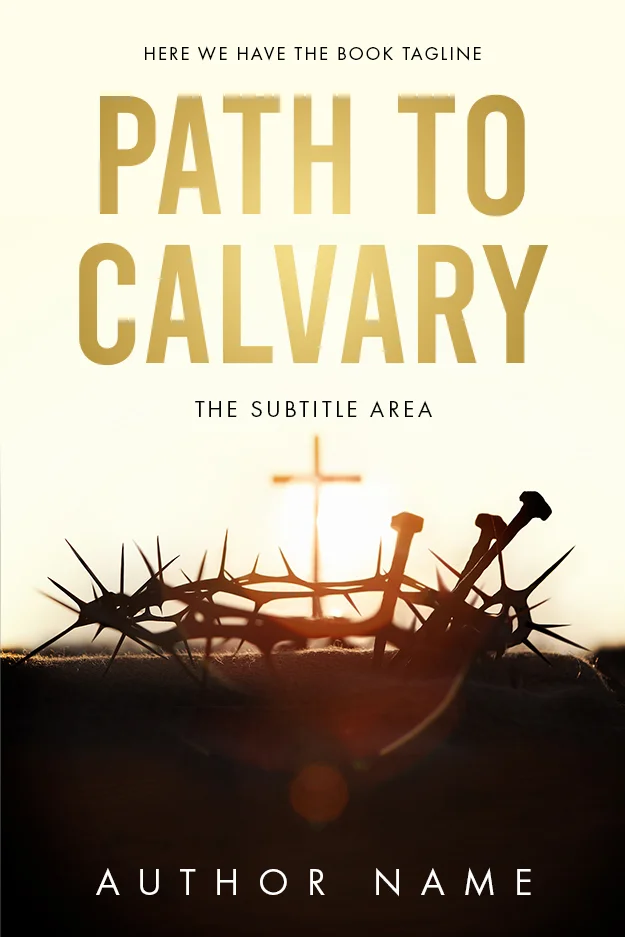
Path to Calvary works in the opposite key: a pale, light-filled field with gold and black type. Its back runs light as well, dark text on the bright ground, gold reserved for the scripture pull so the accent stays rare. A dark back cover behind this front would read as two different books sharing a spine. Designer-created, $49.99.
Anchored in Faith
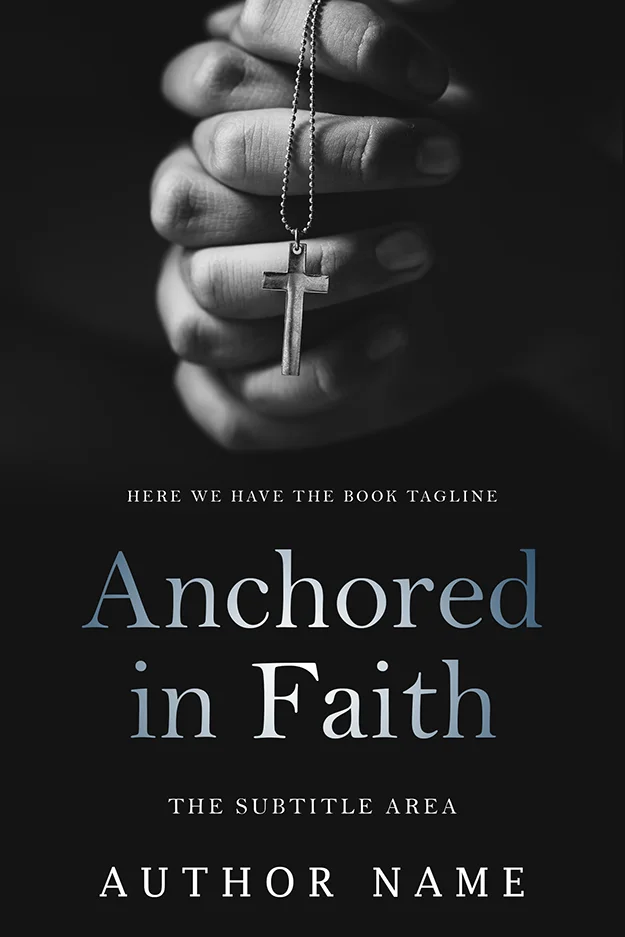
Anchored in Faith is a lesson in restraint the back should copy: monochrome photograph, one typeface family, generous spacing between the tagline, title, subtitle and author lines. A back cover in the same grey scale, with the verse as the only large element, keeps the quiet authority the front promises. Designer-created, $49.99.
If your book needs a wrap built around specific endorsements, a ministry logo or a reading-plan diagram, that is custom territory: $250 for a paperback design including the full back layout. Devotionals that shade toward guided journals also borrow from the self-help and wellness shelf’s conventions, where the structure line matters even more than the verse.
FAQ
— All 48 covers on our religious and spiritual shelf are designer-created, sold once and then retired: $49.99 ebook, $99.99 with the full paperback wrap.
Six zones, top to bottom: a scripture pull with translation credit, a short second-person promise paragraph, a structure line stating the reading plan, one or two recognised endorsements, a two-sentence ministry bio, and the barcode strip with a category line. Buyers scan the verse and the reading plan before anything else.
It depends on the translation. Translation rights differ. The ESV and NIV currently publish limited-use guidelines with verse and proportional limits, required acknowledgments, and additional rules for some commercial uses. Check the rights holder’s current permissions page for your edition and territory. Check the publisher’s current permission page for your translation before finalising the wrap.
One or two on the back cover, from names the target reader’s tradition recognises, each with an affiliation line. More belong inside the front matter, not on the cover. If you have none, leave the zone out entirely; anonymous or generic praise reads as filler on a shelf where trust decides the sale.
No. Devotional buyers weigh the author’s ministry standing over their face, so a clear affiliation line does more work than a portrait. Add a photo when the author’s face is part of an established platform, such as a speaking or broadcast ministry; otherwise spend the space on the verse and structure line.