Quick answer
KDP requires publishers to disclose AI-generated content, and cover images count. If an AI tool created the image, it stays AI-generated even after substantial edits. AI-assisted work, where you made the content and used AI to refine it, does not need disclosure.
Most authors read the KDP publishing form’s AI question as a manuscript question. It is not. It covers text, images and translations, which means your cover file is inside its scope. We sell both kinds of covers, a designer-created shelf and a cheaper AI-assisted tier we label publicly, so buyers ask us which box to tick every week. Here is the distinction Amazon actually draws, and how it lands on the three ways a cover gets made.
The two covers shown are in stock as of this update, each sold once and then retired, from a fantasy shelf 306 covers deep. Designer-created premades run $49.99 ebook and $99.99 with paperback; AI-assisted premades are labelled and run $24.99 and $59.99.
What does KDP actually ask when you publish?
When you publish a new book or edit and republish an existing one, KDP requires you to disclose AI-generated text, images and translations. Two things about that requirement surprise people.
First, it is a declaration to Amazon. KDP’s public guidelines do not describe a reader-facing disclosure badge, so treat the answer as a compliance declaration rather than a marketing claim. Second, AI-generated status is not itself listed as a rejection reason; every publisher remains responsible for ensuring that the content complies with KDP’s content and intellectual-property rules. Answer accurately and retain the cover’s provenance.
Where does Amazon draw the AI-generated line?
Amazon splits AI involvement into two categories, and the split is stricter than most people assume:
- AI-generated: the content was created by an AI tool. Amazon is explicit that it stays AI-generated even if you applied substantial edits afterwards.
- AI-assisted: you created the content yourself and used AI tools to edit, refine, error-check or otherwise improve it. Using AI to brainstorm ideas while creating the content yourself also lands here. AI-assisted content does not need to be disclosed.
The unusual part is that editing does not rescue an image. Ten hours of Photoshop over a Midjourney base is still AI-generated in Amazon’s book, because the test is who created the image, not how much work came after. Plenty of designers get this backwards, and it is the single point the top-ranking help page states without explaining. If you remember one sentence from this article, make it that one.
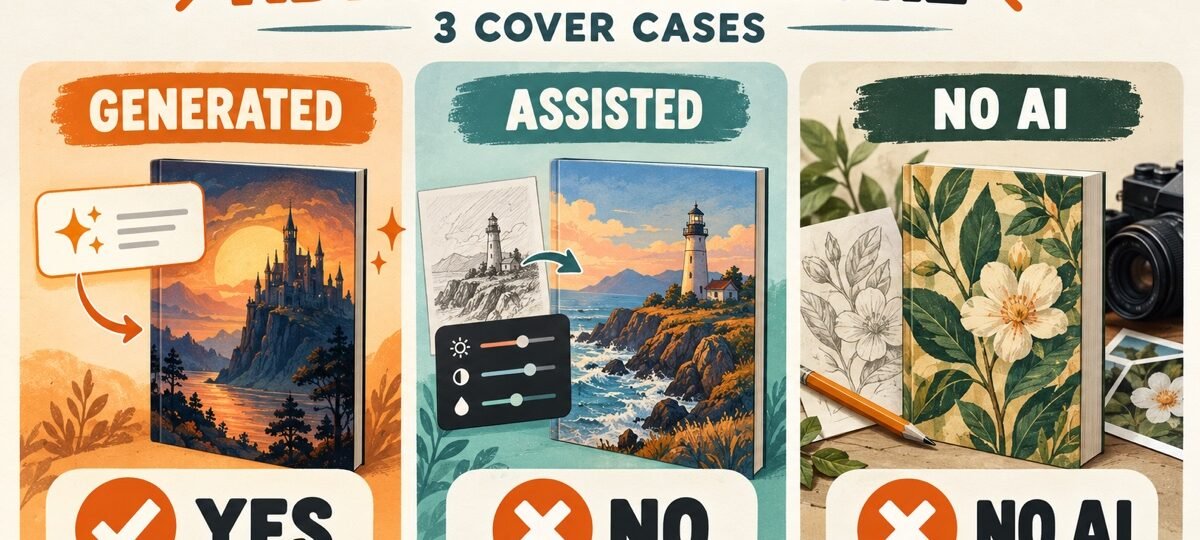
The 3 cover cases
| How the cover was made | Amazon’s category | What you tell KDP |
|---|---|---|
| Artwork generated from a prompt, even if heavily edited, composited and typeset afterwards | AI-generated | Yes: disclose images as AI-generated |
| Artwork the designer created (photography, painting, stock compositing), with AI used only to refine it (upscaling, cleanup, colour tools) | AI-assisted | No disclosure needed |
| Artwork and typography made entirely by hand, no AI tools anywhere | Not AI | Nothing to disclose |
Case two is where honest people disagree at the margins. An AI denoise pass on a photo the designer took is clearly assisted. Generating a background from a prompt and pasting a photographed figure over it is clearly case one for that background. When a file mixes sources, the generated element decides the answer.
How we answer for our own covers
Our catalogue is the worked example, because we label the tier on every product page. Of our 1,702 method-tagged published covers, 707 use the AI + Human label, including 581 currently in stock: the base imagery starts as AI output, then our designer composites, grades and typesets it by hand. Under Amazon’s definition the base image was created by a tool, so if you publish with one, the honest KDP answer is yes, AI-generated images. That is why the label and the lower price exist.
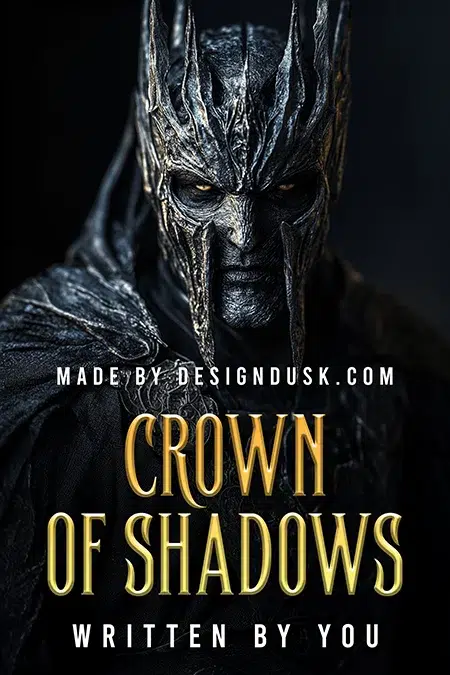
Crown of Shadows
Crown of Shadows is that tier at $24.99: an armored, crowned figure lit out of pure black, gold serif title below. The base portrait began as AI output; the composite, the grading and the type are human work. For the KDP question, the base image decides it: answer yes.
The Raven Queen
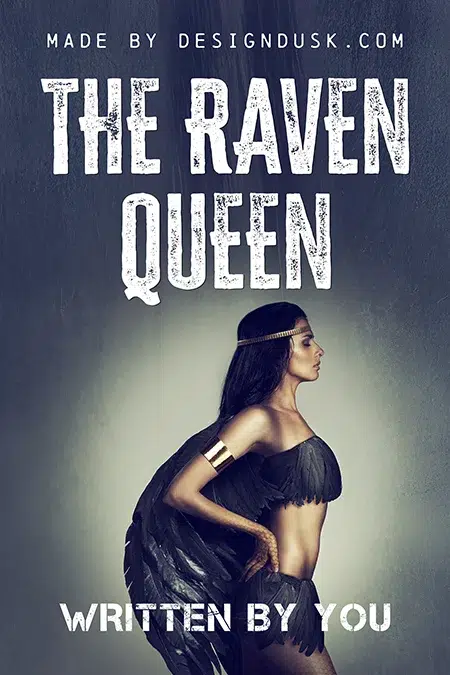
The Raven Queen is designer-created at $49.99: a photographed model in a feathered costume, cut out, regraded cold, and set against a plain vignetted backdrop for the distressed white title. No generative imagery is used, so there is nothing to disclose for the cover under KDP’s rule.
Both live on our fantasy shelf, with the bigger canvases on the epic fantasy shelf. The label travels with the cover, so the KDP answer is settled before you buy.
What if you bought your cover somewhere else?
You answer the KDP question for the whole book, which means you need to know how your cover was made. So ask, in writing: did any generative tool create any part of this artwork? A designer who can answer that plainly is telling you something good about the rest of their process. A designer who gets vague is answering a different question.
If the designer used AI only for reference or brainstorming and then created the final artwork themselves, KDP classifies that as AI-assisted and it needs no disclosure. If any generated element survived into the final file, the honest answer is yes for images. If you cannot establish the provenance, ask for it in writing or disclose conservatively.
One more jurisdiction note: the KDP question is Amazon policy, not law. If you publish from Australia, the legal side has its own rules, which we cover in our Australian AI rules guide.
Does disclosing hurt sales?
KDP’s public guidelines do not describe a reader-facing badge, so we cannot attribute sales changes to the declaration itself. What readers do see is the cover itself, and some buyers care a lot about how it was made. Our answer is to label the tier publicly and price it apart: $24.99 AI + Human against $49.99 designer-created. The labelled tier still sells, and its buyers know which KDP answer applies.
If you want a cover with no AI question attached at all, buy human: the designer-created shelf, or custom design from a written brief at $120 to $350. Our premade vs custom guide walks through which road fits which book.
FAQ
Every cover in our catalogue states its tier on the product page: designer-created from $49.99, AI-assisted and labelled from $24.99, each design sold once. Browse the fantasy shelf or brief a custom cover from $120.
Yes. KDP’s AI rule covers images as well as text, so a cover created by an AI tool must be declared when you publish a new book or edit and republish an existing one. Editing a generated image, even heavily, does not remove the duty.
AI-generated means an AI tool created the content, and it keeps that status even after substantial human edits. AI-assisted means you created the content and used AI to refine, edit or error-check it. Only AI-generated content has to be disclosed; AI-assisted content does not. The test is who created it, not who polished it.
KDP’s public content guidelines do not describe a reader-facing badge or state that the answer appears on the product page. Treat the declaration as information supplied to Amazon; make any public creation-method claim separately and accurately.
AI-generated status is not itself listed as a rejection reason in KDP’s published content guidelines. The cover and the rest of the book must still comply with KDP’s content and intellectual-property rules, and the publisher remains responsible for that compliance.