Quick answer
AI-assisted means AI produced some part of the cover imagery and a human did the rest, but the label covers five very different workflows. The honest questions are which part was generated, who built the typography and print files, and whether the price reflects the machine’s share of the work.
“AI-assisted” is doing a lot of unregulated work right now. It appears on marketplace listings, freelancer gigs and premade shops, and there is no industry standard behind it: the same two words can describe a raw generation with a title slapped on, or a hand-built composite that used AI to extend a background by two centimetres.
We have to define the term precisely because we publish it. Of the 1,702 published designs with a recorded creation-method label, 707 carry our AI + Human label and a lower price. This article is the definition we are accountable to, level by level, with the file you should receive at each.
As of this update, 1,615 covers are in stock, including 581 with the AI + Human label. The labelled designs run $24.99 ebook / $59.99 +paperback / $99.99 +hardback; designer-created premades run $49.99 / $99.99 / $149.99. Every cover sells once, then retires.
Why is there no standard definition?
Because the platforms disagree and the market is young. Amazon KDP draws a public line: content is AI-generated when the AI created it, even with substantial human edits afterwards, and AI-assisted when a human created it and used AI to edit, refine or check it, with only the first requiring disclosure. Marketplaces and premade shops each improvise their own labels, and plenty use none. So the label only means what the specific seller can show you it means. Here is the full spectrum.
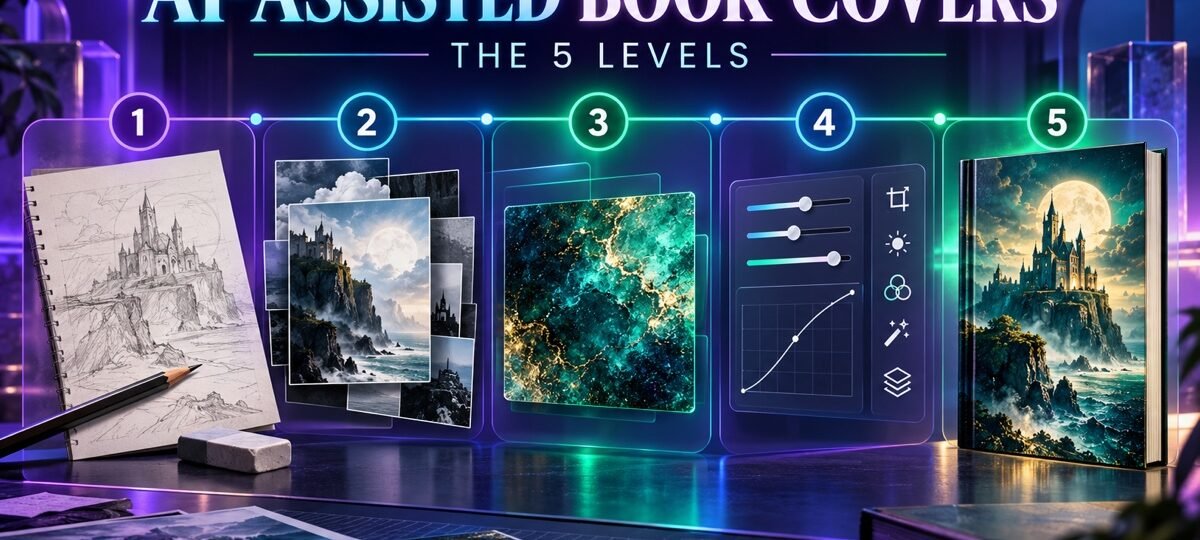
The five levels of AI involvement
Level 1: prompt and ship
Someone types a prompt, picks the best output, adds a title in a free font, and lists it. Total time: minutes. What you receive: one flat JPEG, often at whatever size the generator produced, with no print wrap, no licensed fonts and no source file. At this level “AI-assisted” is generous; “AI-generated” is the accurate term, including for KDP’s question.
Level 2: generated imagery, finished by hand
AI renders the scene; a designer then does everything else: crops and rebalances the composition, grades the colour, sets real typography in licensed fonts, and builds correct ebook and print files. The imagery is the machine’s, the cover as a product is a person’s. This is precisely where our AI + Human tier sits, and it is why the tier exists at half price rather than at zero or at full.
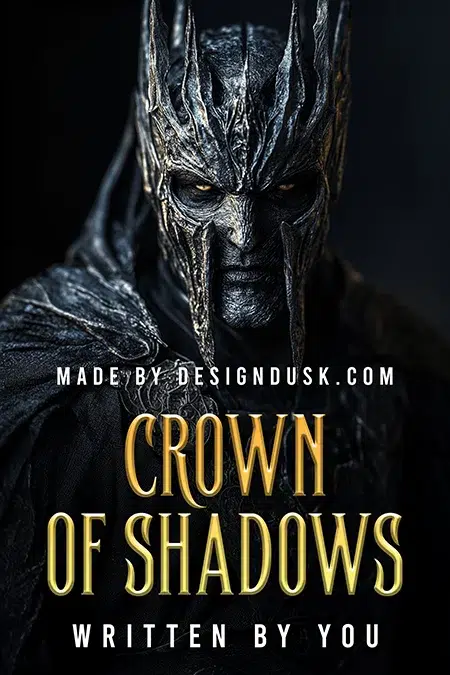
Crown of Shadows
Crown of Shadows, AI-assisted, labelled, $24.99. The armoured king is generated imagery; the designer’s share is the near-black grade that buries the background, the tight crop that keeps the amber eyes on the title line, and the imperial gold serif set in a licensed font. The product page says all of this before you pay.
Level 3: AI elements inside a human composite
The designer builds the cover the traditional way, from licensed stock and painted elements, but one component is generated: a texture, a sky, a castle in the far distance. The composition, figures and everything the eye lands on first are human work. File-wise this looks like a normal layered composite in which one or two layers happen to be generated.
Level 4: AI as an invisible tool
No generated subject matter at all, but AI-powered features inside standard software touched the file: an upscaler, denoiser, background remover or error-checking tool applied to human-created source material. Under KDP’s definitions, that editing-and-refining use is AI-assisted and does not need to be declared. Generative fill is different when it creates new image content that remains in the final cover; that output can cross into AI-generated territory, so ask what the tool actually added.
Level 5: no AI at all
Licensed stock photography or original artwork, composited, retouched and typeset by hand, with AI features switched off end to end. The human-labelled side remains larger: 995 of the 1,702 method-tagged published products, including 919 currently in stock.
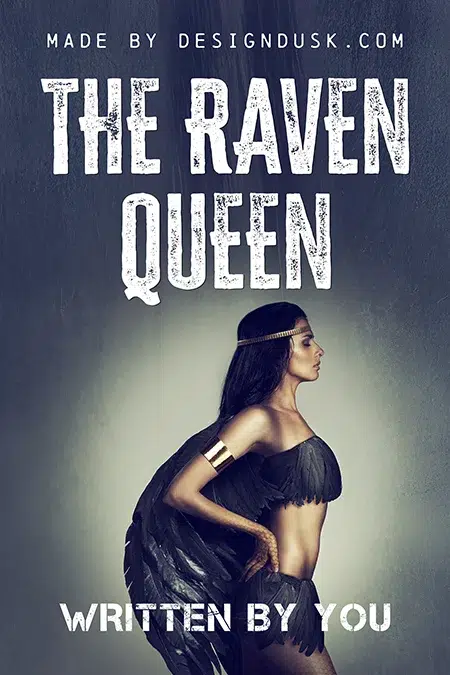
The Raven Queen
The Raven Queen, designer-created, $49.99. A photographed model in a feathered costume, cut out, regraded cold, and set against a plain vignetted backdrop so the distressed white capitals can run huge. Every element traces to a licence: the photo, the fonts, the finished file.
What file do you receive at each level?
The deliverable is the tell. Descriptions can stretch; files cannot.
| Level | Imagery source | What lands in your inbox | Fair price signal |
|---|---|---|---|
| 1. Prompt and ship | Generated | One flat JPEG, no wrap, no licences | Near-free |
| 2. Generated, hand-finished | Generated | Correct ebook file, print wrap on request, licensed type | Discounted (our $24.99 tier) |
| 3. AI element in composite | Mostly licensed stock | Layered-file provenance, stock licences, one generated element | Close to human rate, disclosed |
| 4. AI as tool only | Licensed stock or original | Full human deliverables; AI touched process, not subject | Human rate (our $49.99 tier) |
| 5. No AI | Licensed stock or original | Full human deliverables end to end | Human rate (our $49.99 tier) |
If a seller’s label and price do not line up with a row of this table, ask which row they mean. A shop using “AI-assisted” to mean level 1 while charging level 4 prices is using the label as camouflage.
What the label means when you publish
Three practical consequences follow from the level, so pin it down before upload day:
- Disclosure. KDP asks about AI-generated content at publish time. Levels 1 and 2 imagery falls under “AI-generated” by Amazon’s definition even after heavy human editing; level 4 is AI-assisted and exempt. Read KDP’s current definitions, then answer from the level honestly.
- Copyright. The US Copyright Office says AI assistance does not prevent copyright protection for human-authored expression, creative selection or arrangement, and sufficiently creative human modifications. Purely AI-generated material, and material without enough human control, is not protected; each work is assessed case by case.
- Jurisdiction. Rules differ by country; Australian authors have their own set, covered in our Australia AI rules guide.
Level also tells you what you can ask of the design. A level 2 cover cannot get a surgical art revision the way a layered composite can, which is one reason our custom work stays fully human: custom design runs $120 to $350 with sketches, revisions and source provenance included. For a premade, the label plus the price is the contract; see both tiers side by side on the fantasy shelf and the paranormal romance shelf, and read premade versus custom if you are unsure which route your book needs.
FAQ
Both tiers, labelled on every product page: designer-created from $49.99, AI-assisted from $24.99, each design sold once. See the labels working on the fantasy shelf.
It means AI produced part of the work and a human produced the rest, with no industry standard for the split. In practice it spans five levels, from a raw generation with a title added through to human composites where AI only touched a texture or an edge. Ask the seller which part was generated and what file you receive.
In Amazon KDP’s definitions, content is AI-generated when the AI created it, even if a human edited it substantially afterwards, and AI-assisted when a human created it and used AI to edit, refine or check it. The test is who made the thing itself, not how much polishing happened after.
Under KDP’s published policy, AI-assisted work does not need to be declared, while AI-generated content does. The catch is the definition: generated imagery that a designer later refined still counts as AI-generated. Classify your cover by who created the imagery, then answer the publishing question from that classification.
They should be, because the machine did the costliest part. Our labelled AI + Human tier is $24.99 against $49.99 for designer-created work, and that gap is the honest price of the machine’s share. An AI-assisted cover priced at full human rates means the discount went to the seller instead of to you.