
Quick answer
A biography or autobiography cover is built on one early decision: portrait or no portrait. If you use a photograph of a real person, clear the rights with whoever owns the photo, not the person in it. If you have no usable image, objects, illustration and era-true typography carry the story just as credibly.
This guide covers books about a real life: a biography of someone else, or the public story of your own. The design questions are different from every fiction genre because a real person, real photographs and real rights sit at the centre of the brief. We design these covers weekly, and the same six decisions come up every time.
One scope note before we start. If you are writing a first-person literary memoir rather than a life-and-times account, the conventions shift toward mood and metaphor; our memoir cover design guide covers that lane, and this article stays out of it.
Our biography and memoir shelf holds 52 covers as of this update. Every design is sold once, then retired. Designer-created covers run $49.99 ebook / $99.99 with the paperback wrap; AI-assisted covers elsewhere in the catalogue are always labelled and start at $24.99.
Decision one: portrait or no portrait
A face on the cover makes a promise: this person is worth a book. That promise is easy to keep when the subject is known, which is why celebrity autobiographies almost always lead with the face. For an unknown subject the calculation flips. A stranger’s portrait has to earn attention through craft: lighting, crop and expression have to be strong enough to stop a browser who has no idea who they are looking at.
Three portrait treatments cover most briefs.
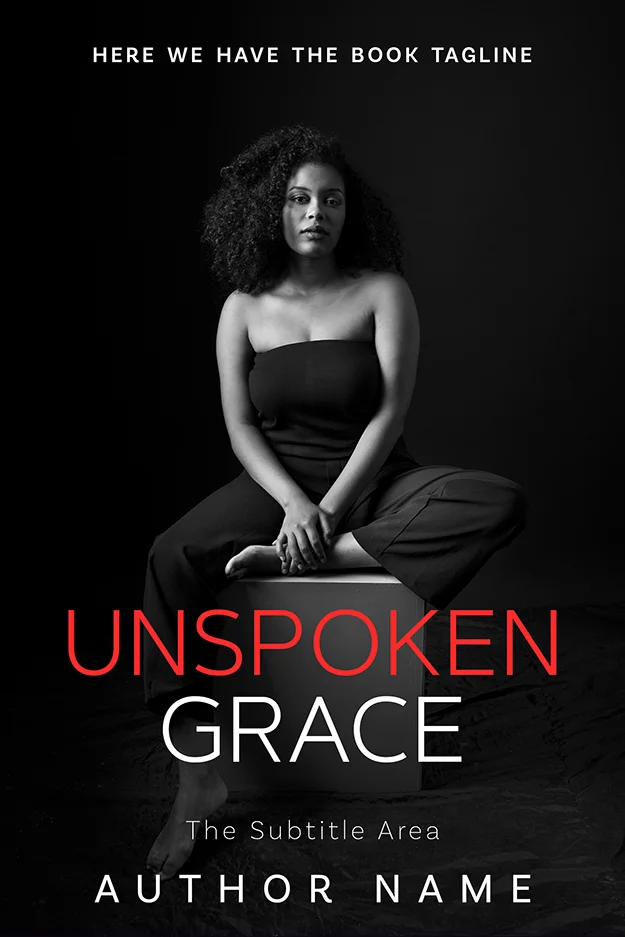
Unspoken Grace
The formal studio route. One figure, one light source, the whole background falling to black, and the title split into red and white capitals so the red carries all the colour on the cover. This treatment says the person is the story: no props, no location, no distraction. Designer-created, $49.99 ebook or $99.99 with the print wrap.
Faces of Resilience
The documentary route. A weathered face fills the frame, warm skin and an orange scarf against cold teal, with the rounded pale yellow title sitting over the scarf rather than the eyes. Warm-against-cool is the classic biography contrast, and the direct gaze lands exactly where a browser looks first. Suits lives of hardship and endurance.

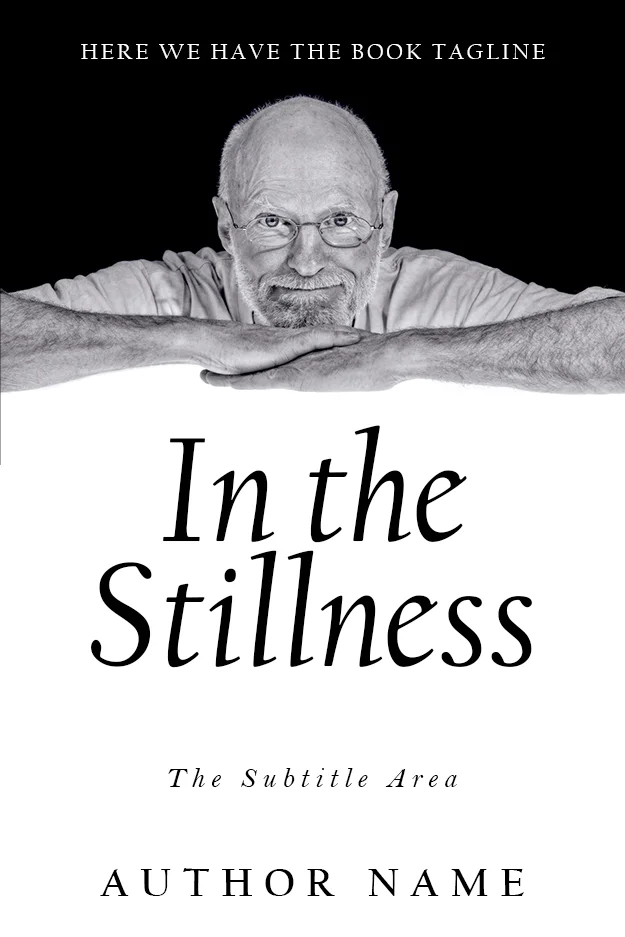
In the Stillness
The album route. The frame splits in two: a black field holds a monochrome photograph up top, and a clean white panel below carries an italic serif title. The split frames the photo like a print in an album, which does the archival work for you. Quiet, formal, and instantly nonfiction.
Decision two: do you have the rights to that photo?
This is the decision that stalls more biography covers than any design question, so get it moving early.
The copyright in a photograph normally begins with the photographer, or with an employer when the photograph qualifies as work made for hire. It does not automatically belong to the person pictured, so permission from the subject or their family is not the same thing as a licence to print the image. For a family snapshot, that usually means tracking down who took it. For anything published, it may mean the publication, the photographer’s estate, or an archive.
The subject’s own consent is a separate, state-specific question. California’s postmortem publicity statute, for example, can run for 70 years, but it expressly excludes books and advertisements for those books from its ordinary product definition, subject to fact-specific exceptions. Other jurisdictions draw different lines. None of this is legal advice: for a living private subject, written consent is the practical safeguard, and for a contested or estate-controlled figure, a publishing attorney earns their fee.
Do not assume fair use clears a cover image. US fair use is a four-factor, case-specific test, and the Copyright Office notes that only a federal court can finally decide whether a use is fair. Licensing the photograph is the safer production plan.
Decision three: sourcing archival photos
For historical subjects, the archive is the palette. The usual sources are family albums, local newspapers and historical societies, university special collections, national archives, and commercial wire or stock archives. Commercial archives license by defined uses, so request a quote for the exact cover, edition and territory instead of assuming a general stock licence applies. In the US, works published before January 1, 1931 are in the public domain as of 2026, which can make older published photographs easier to clear than mid-century ones. Unpublished photographs and later publications follow different duration rules, so verify the status of the specific image.
Two practical checks before you fall in love with a photo. First, resolution: a cover needs roughly 300 DPI at print size, and many archive scans are supplied smaller, so confirm the file dimensions before licensing. Second, condition: creases, foxing and colour casts are fixable, but restoration time belongs in the budget. Our custom service handles the restoration and the layout together; the design tiers run $120 to $350.
Decision four: what if there is no usable photo at all?
Most self-published biographies and autobiographies hit this wall. The subject was private, the album burned, or every surviving photo is a blurry group shot. Three routes work, and none of them is a compromise.
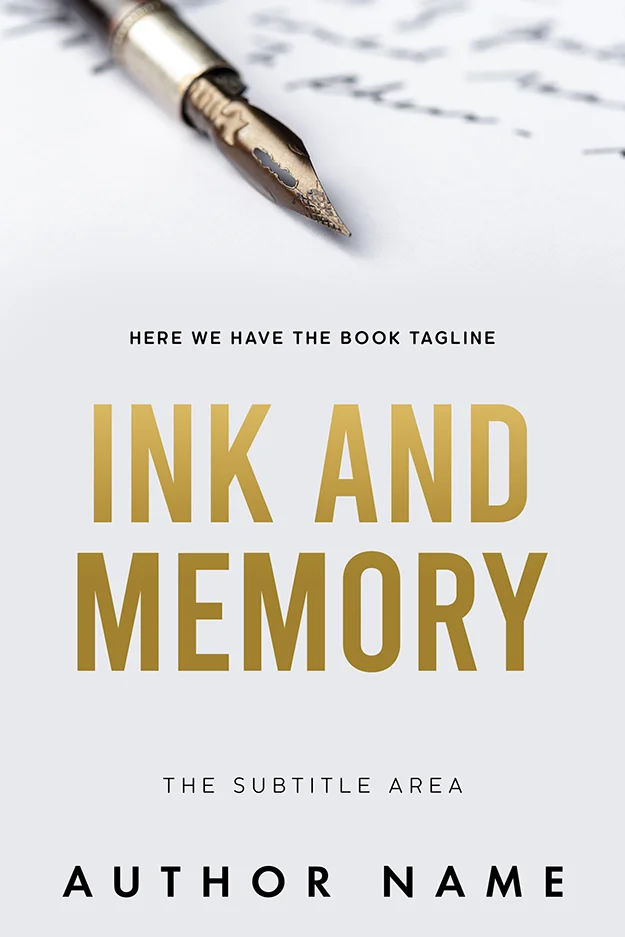
Ink and Memory
The object route. A fountain pen nib on a handwritten page, everything washed nearly to white, the title in muted gold capitals. No face anywhere, yet it reads as a life told through letters and diaries. One tool, one texture, one metallic accent: the restraint is what makes it feel true.
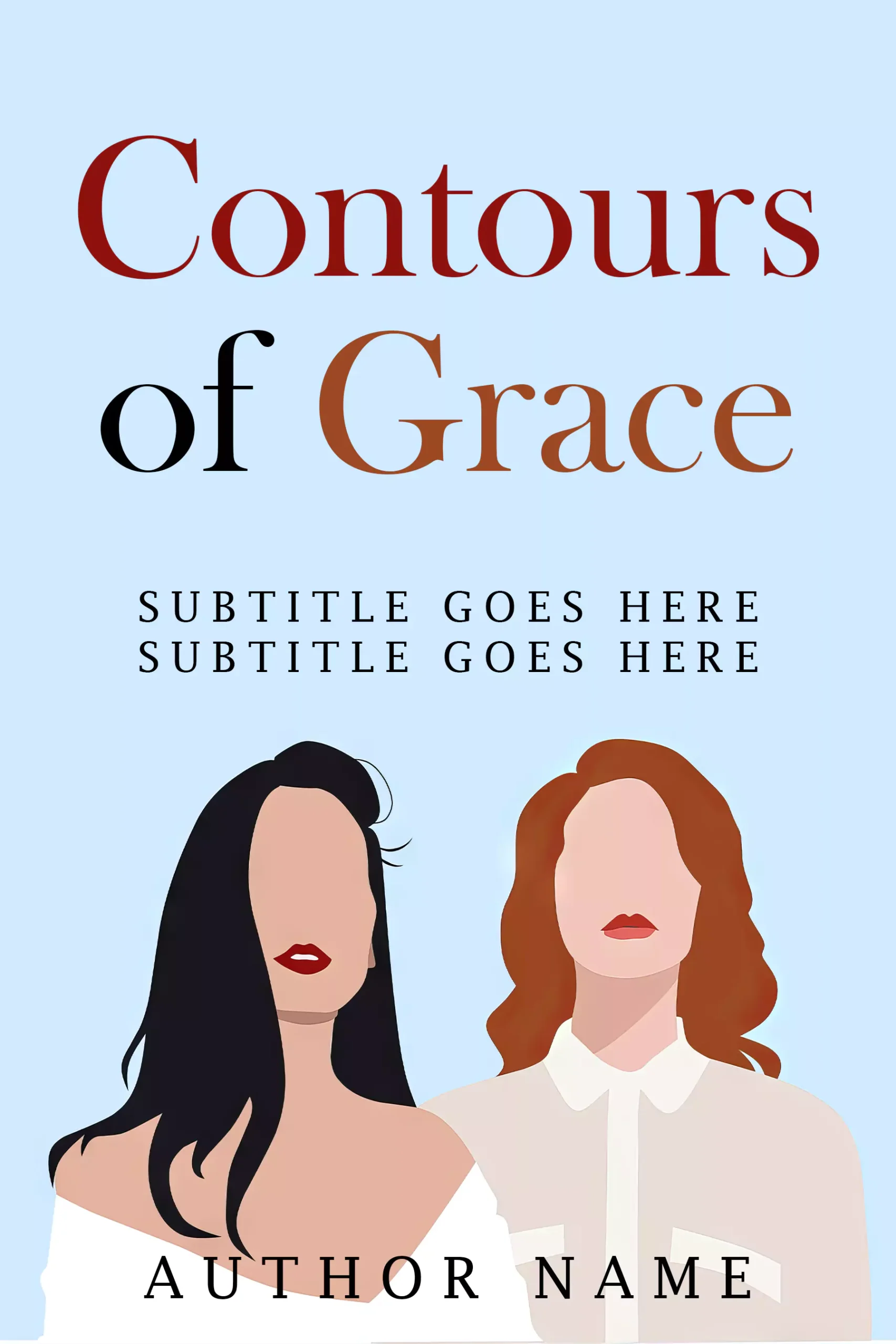
Contours Of Grace
The illustration route. Two women drawn flat and featureless on a pale blue field with a two-colour serif title. Illustration sidesteps the likeness problem entirely: it suggests real people without depicting any identifiable person. It also carries warmth, which photography of strangers rarely manages.
The Life Of A Doctor
The uniform route. A white coat, a tie and a draped stethoscope stand in for the person completely. This works for any profession-shaped life, from nursing to trucking to the pulpit: the reader knows whose story this is before a single name registers. More profession-led designs sit on our other non-fiction shelf.

Decision five: era typography
Readers date a cover in about a second, so set the clock deliberately. Geometric sans faces and deco capitals say 1920s and 30s. Brush scripts and letterpress-flavoured serifs say mid-century. Heavy rounded serifs on warm earth tones say the 1970s. A clean grotesque or a quiet modern serif says the present, which is the right default when the life spans decades.
The working rule: pick the era of the book’s defining chapter, then apply one era cue only. Type, palette or photo treatment can carry the period; all three at once turns a biography into a costume.
Decision six: build it or buy it
A premade from the biography and memoir shelf is the fast route: $49.99 for the ebook cover, $99.99 with the print wrap, and the design retires the moment you buy it. When the brief needs a specific portrait cleared, restored and composed, custom runs $120 to $350; the full pricing logic is in our cover design cost guide.
FAQ
Browse the biography and memoir shelf: 52 covers in stock, each sold once. Designer-created from $49.99, custom from $120.
One committed element: a portrait with strong lighting and a direct gaze, a single object that stands for the life, or one era-true typographic treatment. Good biography covers also date themselves on purpose, using type and palette from the subject’s defining decade, and they keep the subtitle legible at thumbnail size.
Usually two questions are involved. Who owns the photograph’s copyright, and do privacy or publicity rules affect use of the person’s likeness in the relevant jurisdiction? For living private subjects, written consent plus a licence from the actual copyright owner is the practical standard.
Only if you are recognisable to your buyers, or the photo is strong enough to stop a stranger. Public-figure autobiographies lead with the face because the face sells the book. For everyone else, a symbolic object, a meaningful place or a from-behind figure usually converts better than an average portrait.
An autobiography cover sells a whole documented life and leans on portraits, archives and era typography. A memoir cover sells a theme and a voice, so it leans on mood, metaphor and atmosphere. If your book is a first-person literary memoir, design to memoir conventions rather than biography ones.