
Quick answer
Fantasy is not one genre on a shelf. It is eight-plus subgenres with distinct visual codes, and readers tell them apart at thumbnail size. Epic wants power symbols and hot metal on black, grimdark pushes past comfort, cozy promises warmth, romantasy splits jewel tones across a charged couple. A cover in the wrong code mis-sells the book to exactly the wrong audience.
A grimdark cover on a cozy novel buys you one-star reviews from readers who were promised the wrong book. That is why subgenre accuracy comes before beauty in fantasy cover design, and why this guide is organised by code rather than by technique.
Below is each subgenre’s code: palette, typography and subject conventions. Where our fantasy book covers shelf holds a strong example you will see the real thing with a buy link. Where the shelf runs thin we say so honestly, because two of these subgenres are custom territory for everyone right now, not just for us.
Availability note: the fantasy shelf holds 230+ in-stock designs as of this update, each sold exactly once and then retired. Designer-created covers are $49.99 for the ebook edition; our labelled AI-assisted tier is $24.99. Every example below states which it is.
1. Epic and high fantasy
The code: a symbol of power such as a crown, throne or sword, or a lone monumental figure. Near-black grounds with one hot metal, gold or flame. Tall serif capitals, often textured. Scale and gravity in everything.
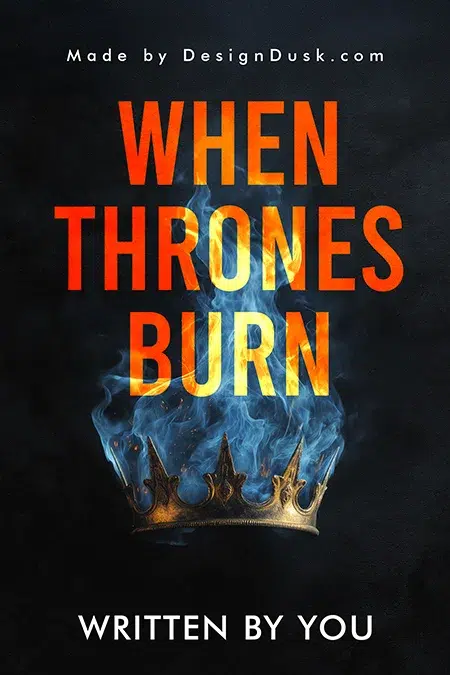
When Thrones Burn
The cleanest execution of the code on our shelf: one gold crown burning blue and orange on black, fiery capitals above, nothing else in the frame. At thumbnail size it reads as a lit match in a dark room, which is exactly the promise epic readers scan for.
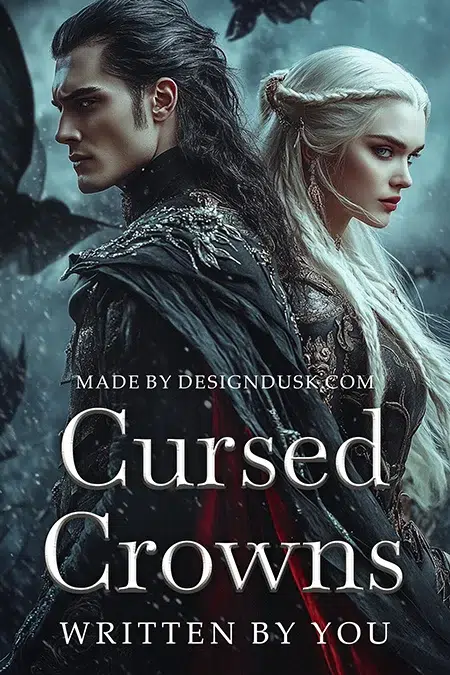
Cursed Crowns
Character-led epic works when the light is theatrical. A dark prince and a white-haired queen stand back to back among ravens and snowfall, the whole frame in muted blue-grey. This one is from our labelled AI-assisted line, which is why it is $24.99 rather than $49.99.
2. Grimdark
The code: everything epic does, pushed past comfort. Desaturation, grain, blood-red accents, faces marked and hostile. Distressed or cracked type. The cover should feel slightly unsafe.
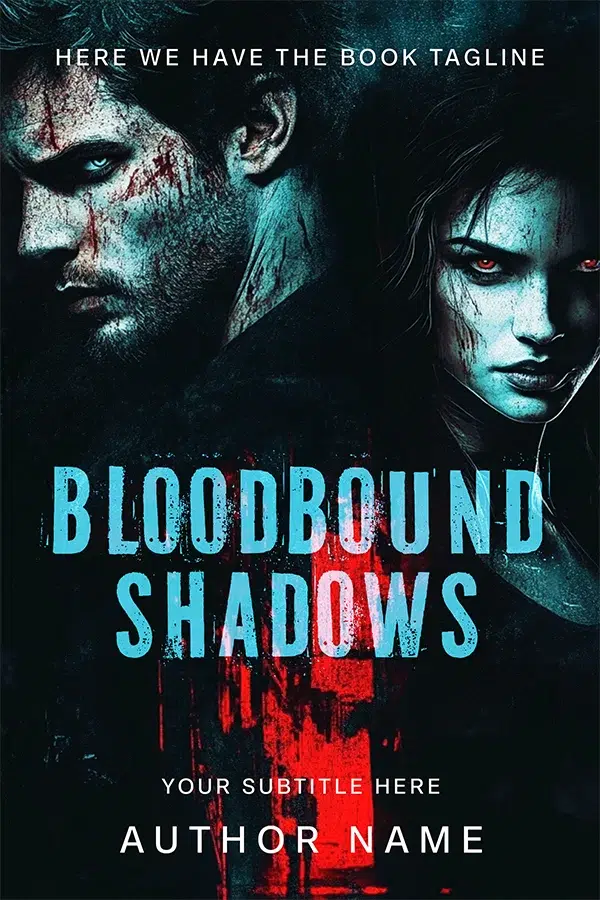
Bloodbound Shadows
The full kit: two hard-eyed faces in teal darkness, blood spatter, a red smear down the centre, and scraped blue capitals. Nobody picks this up expecting a comfortable read, which is the point.
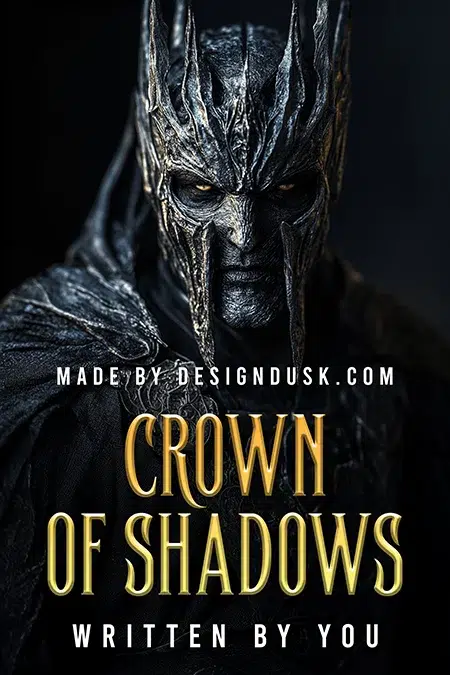
Crown of Shadows
Between epic and grimdark sits dark fantasy. An armoured king whose spiked crown dissolves into the darkness around him shows how the two codes blend at the border. AI-assisted tier, labelled, $24.99.
3. Cozy fantasy
The code: warm light sources like lanterns, fireflies and hearths. Rounded friendly type. Creatures you would adopt rather than fight. Saturated storybook colour. The promise is comfort with a little magic.
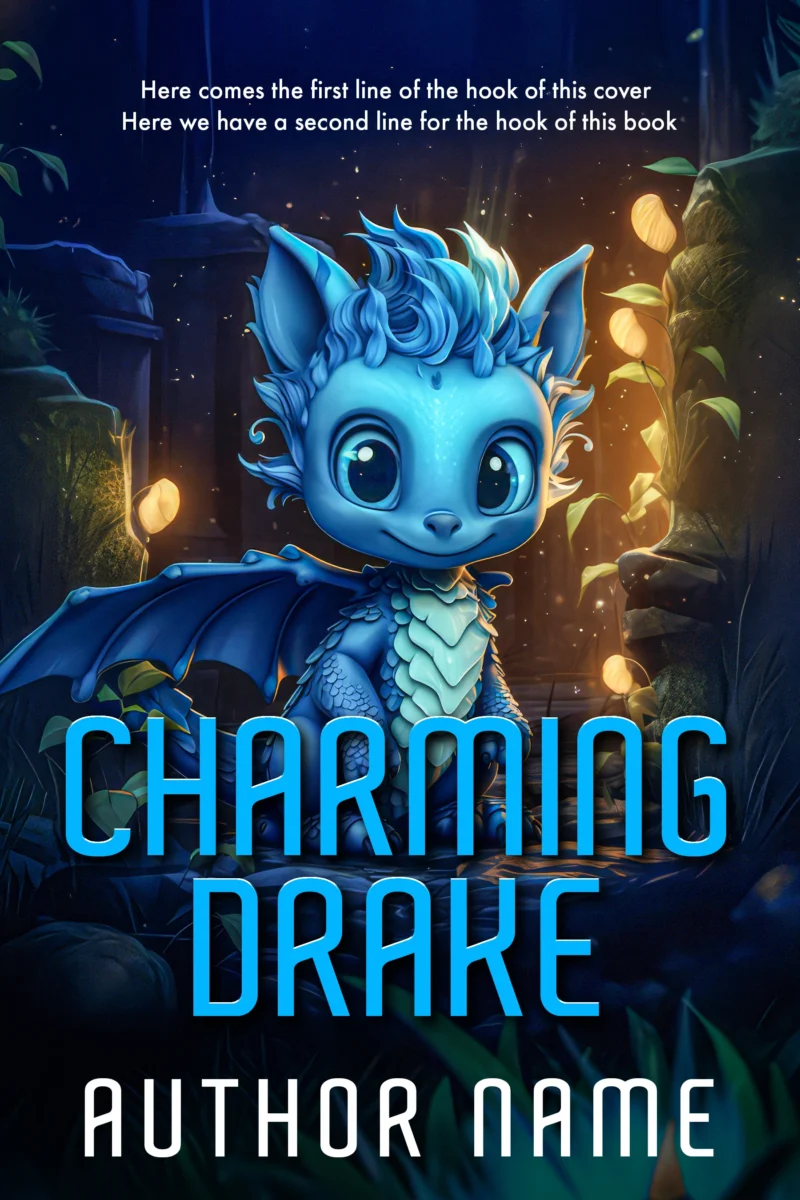
Charming Drake (blue)
A wide-eyed blue dragon hatchling in a glowing night garden, title in soft rounded capitals. Nobody mistakes this for grimdark, which is the entire point of subgenre codes.
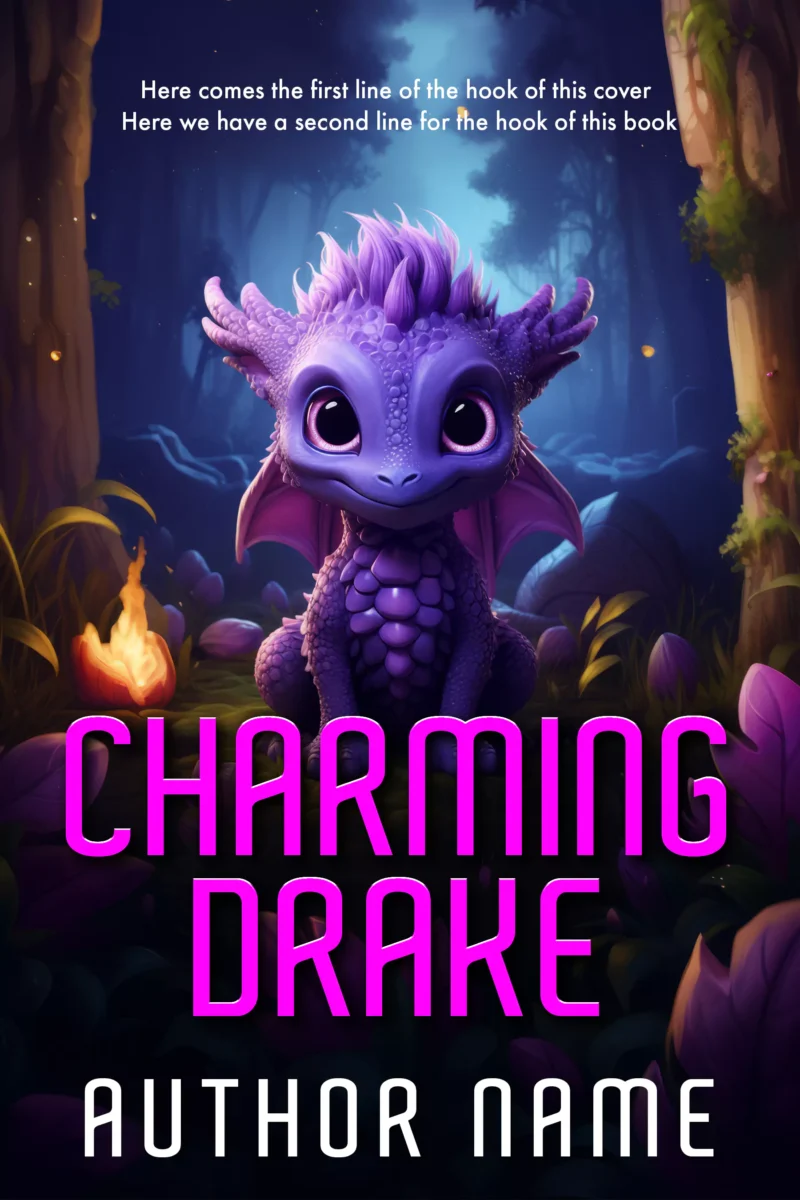
Charming Drake (purple)
The same adoptable-dragon series in a purple colourway, this hatchling beside a small campfire. Series covers like these are built to sit next to each other on a shelf.
Honest inventory note: our cozy corner currently runs one dragon series deep, and that is the candid state of the premade market for this young subgenre, not just of our shelf. If nothing on the fantasy shelf fits your cozy novel, a custom brief beats hunting premades anywhere.
4. Urban fantasy
The code: a modern city as the magical surface. Neon, wet streets, a protagonist mid-stride with visible magic. Cool blues and purples cut with one neon accent. Clean sans or hybrid type. It must read contemporary first and magical second.
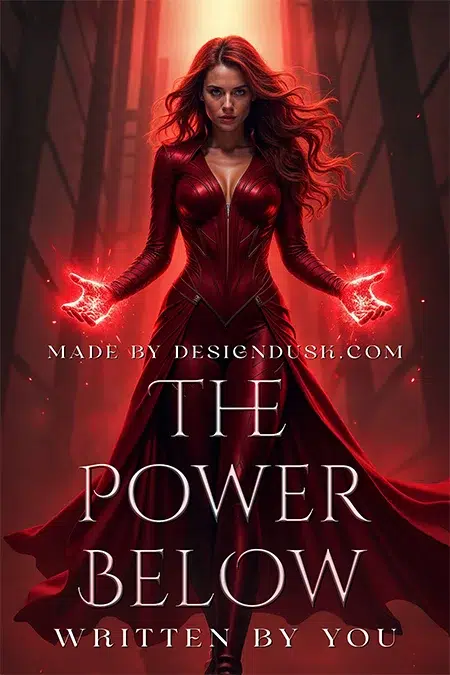
The Power Below
The code straight down the line: a woman in red stands in a dark city canyon with magic burning in both hands. Contemporary first, magical second, and the buildings do the world-building.
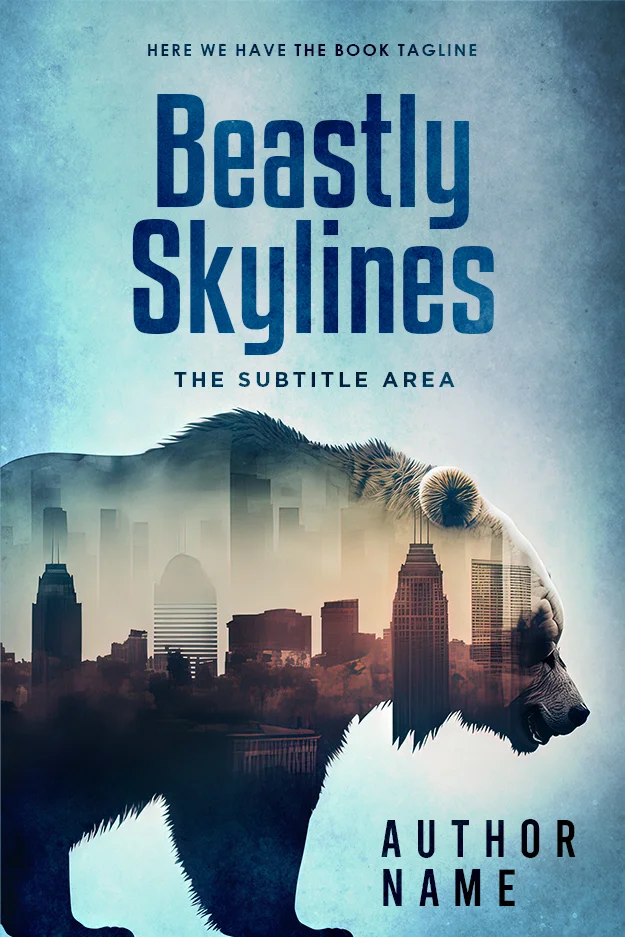
Beastly Skylines
The shifter end of urban fantasy. A bear silhouette carries a whole city skyline inside it, in icy blue with clean condensed type. The double exposure is the plot in one image.
The urban corner of the fantasy shelf is small but real. Our urban fantasy cover guide explains the city-at-night formula and three ways to stand out inside it; urban briefs are also regular custom work when your city or creature is specific.
5. Romantasy
The code: two figures in charged proximity, or one figure styled for longing. Jewel palettes, often split warm against cold to signal the couple. Elegant serif or high-contrast fashion type. Botanical or celestial ornament. The romance must be visible from across the room.
The Crowned Divide
The code in one frame: a king and queen lit pink against blue, the divide literally rendered in colour temperature. AI-assisted tier, labelled, $24.99.

Bride of the Woods
The fairy-tale end of romantasy trades split palettes for atmosphere. A crowned bride stands in a misty pine forest, her blue cloak spread like wings, pale roses in hand, gold serif above.

6. Progression fantasy and LitRPG
The code: a protagonist facing away or mid-ascent. Scale markers such as towers, gates and ranked foes. HUD-like framing or glowing glyphs for LitRPG. Saturated energy effects. Bold hybrid type with a tech edge.
Another honest gap: nothing on our shelf currently carries this code. It is the youngest subgenre here and premade supply lags demand across every shop, not just ours. Custom is the route, and the conventions above are what we build to.
7. Portal and crossover fantasy
The code: the threshold itself. Doors, mirrors, swings, staircases into sky. Soft light gradients between the mundane side and the magical side. Lyrical serif type. Wonder, not war.
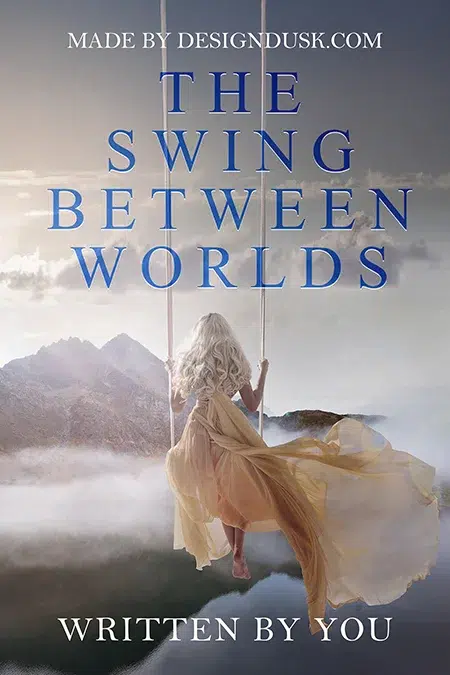
The Swing Between Worlds
A woman on a swing suspended above clouds and mountain peaks, hair and dress in the wind, letterspaced blue serif above. The threshold is the swing, and the two worlds are above and below her.
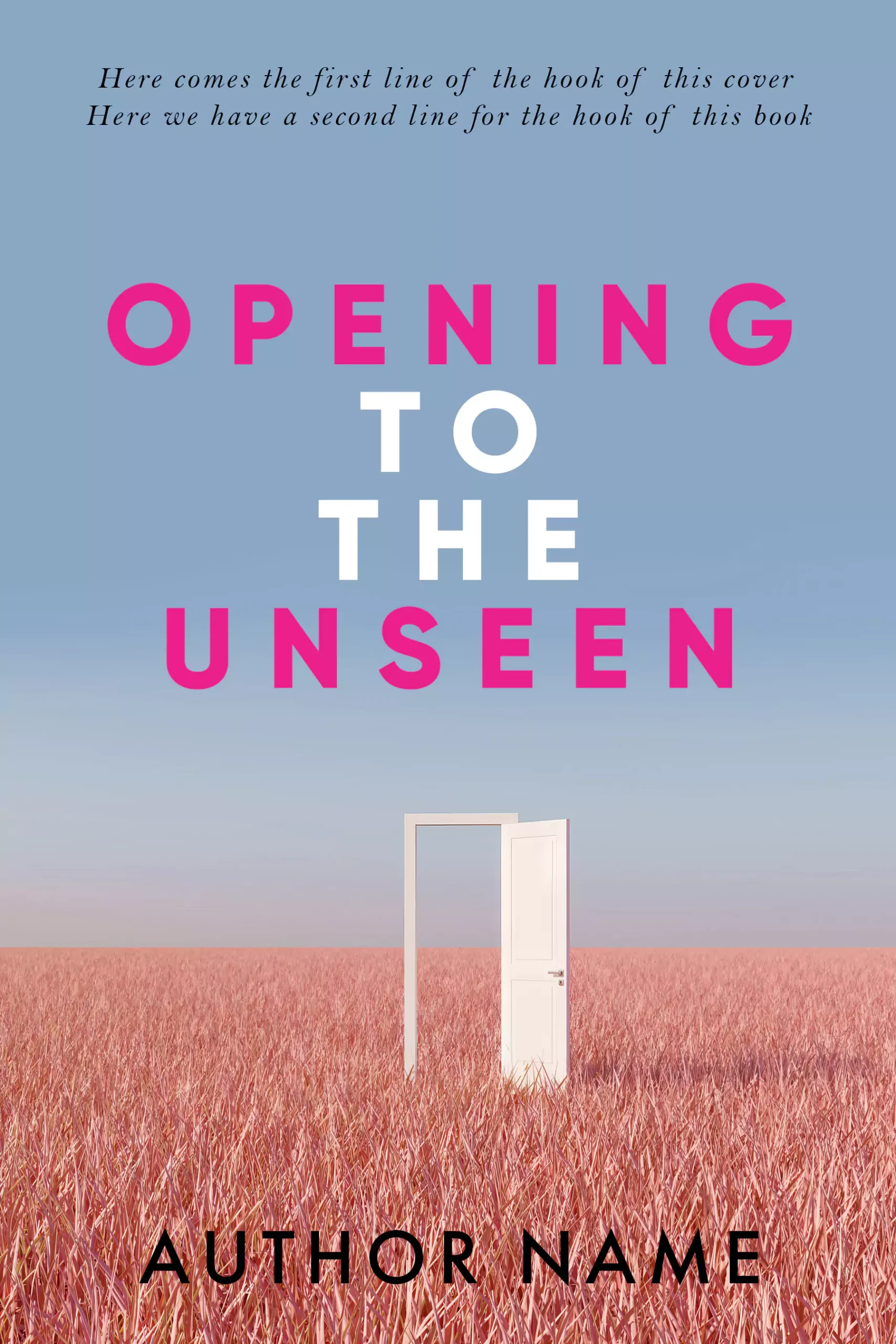
Opening to the Unseen
The minimalist end of the same code: one white door standing open in a pink field under a clear sky. Nothing else is needed, because the door is the entire promise.
8. YA fantasy
The code: one young figure or one bold symbol, close-cropped. Saturated duotones in teal, violet and crimson. A big title treatment that competes with the art, because YA covers live and die on type. Motion and weather, snow, sparks and petals, for energy.
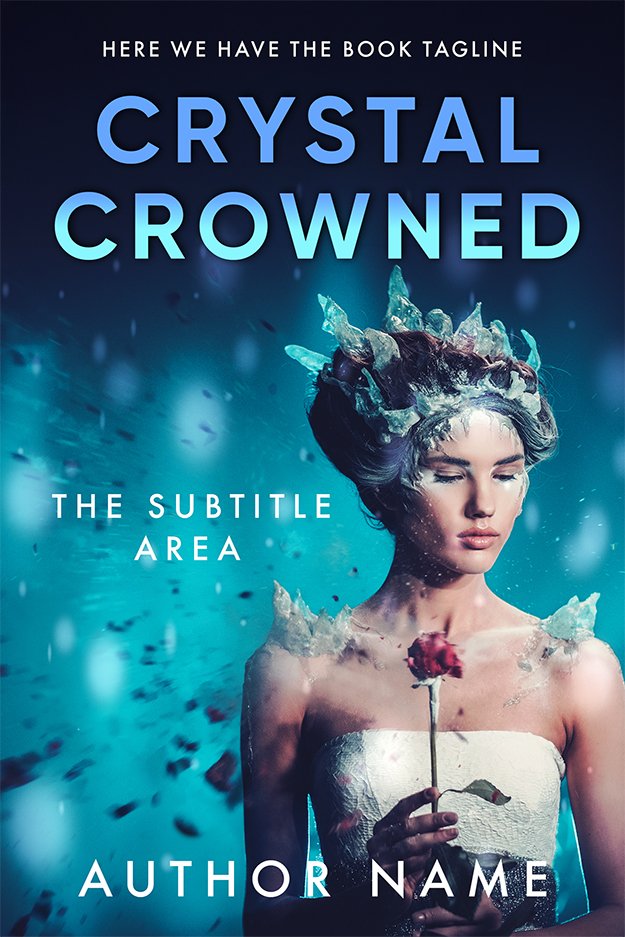
Crystal Crowned
Reads YA from ten feet: an ice-crowned young queen in a cyan snowstorm holding a single red rose, with a frosted gradient title. The one warm element is doing all the emotional work.
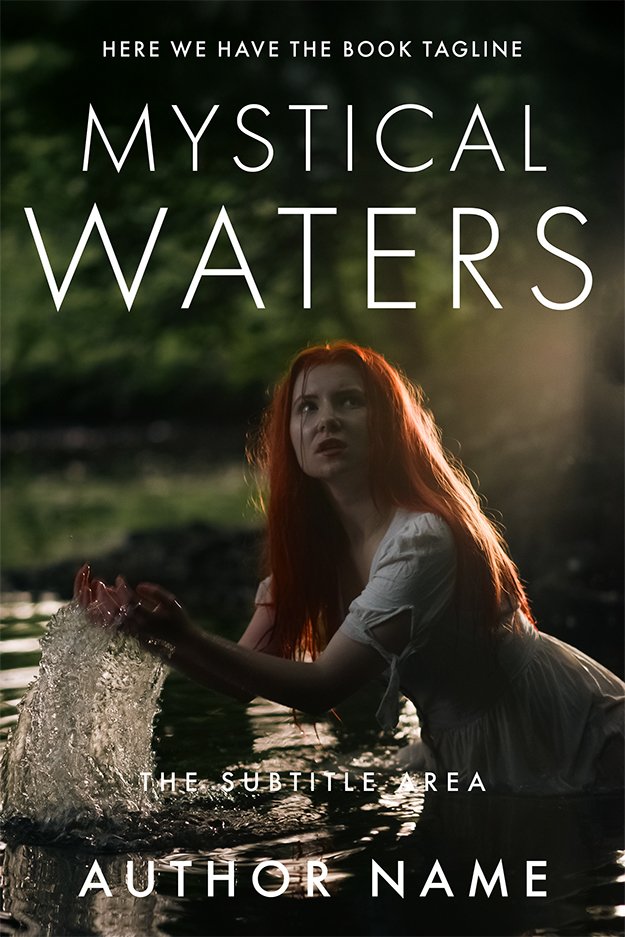
Mystical Waters
The paranormal end of the YA shelf: a red-haired girl in white kneels in dark water, mid-gesture, photographic rather than painted. The realism is what makes the magic feel close to home.
What our shelf says about supply and demand
Across the 230+ in-stock fantasy covers, epic fantasy and dark fantasy dominate, romantasy holds a solid middle, and cozy, urban and portal run a handful deep each. Progression and LitRPG are the genuine zero, on our shelf and across the premade market. If you write in the dominant codes, the premade route is rich and cheap. If you write in the young subgenres, custom design gets you a correct cover faster than waiting for supply to catch up.
Both routes start from the same two pages: the fantasy shelf and the custom brief.
Fantasy book cover FAQ
Subgenre accuracy first: the palette, type and subject must match what readers of your specific subgenre expect. Then the universals: one dominant focal point, contrast that survives thumbnail size, and licensed type that carries mood.
The visual code of the romance-fantasy crossover: two charged figures or one longing figure, jewel tones often split warm against cold, elegant serif type, and romantic ornament such as botanicals or celestial marks. It signals that the love story carries equal weight with the fantasy.
It is a subgenre decision. Epic and object-led covers sell power symbols, romantasy and YA usually show figures, and grimdark shows faces to unsettle. Character-accurate illustration matters less than subgenre-accurate mood.
Premade fantasy covers at DesignDusk run $24.99 for the labelled AI-assisted tier and $49.99 for designer-created, both for the ebook edition and each sold exactly once; adding the print wrap is $59.99 and $99.99 respectively. Custom fantasy design runs $120 to $350 by print format. Illustrated freelance commissions elsewhere routinely run four figures.